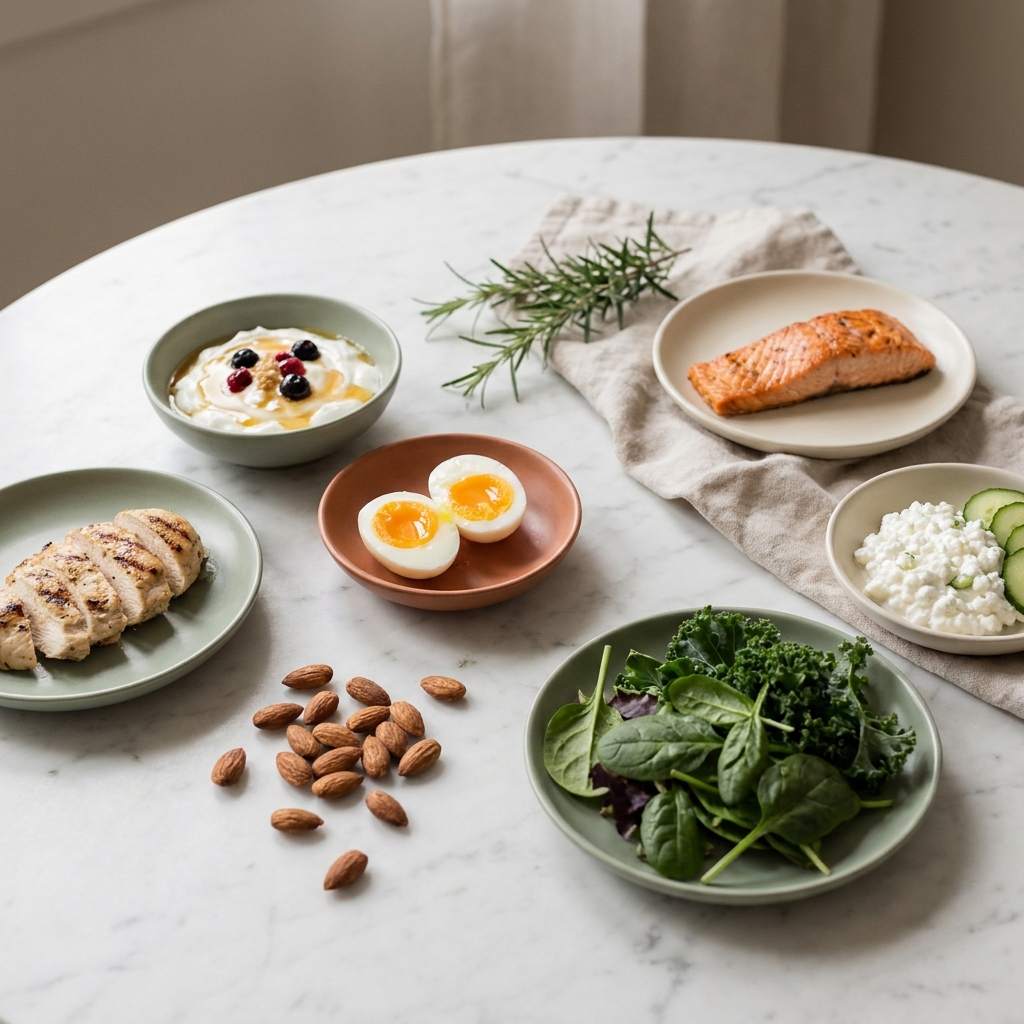
In January 2026, the Dietary Guidelines for Americans raised the adult protein target from 0.8 g/kg of bodyweight to 1.2 to 1.6 g/kg, and they recommend protein at every meal. That is a meaningful shift. Most “top 10 high protein foods” lists still rank foods by protein per calorie alone. They overlook a simple fact: a 30-year-old, a perimenopausal woman, and a 55-year-old man get different value from the same chicken breast.
This guide organizes high-protein foods around what different bodies actually need. It covers per-meal leucine thresholds, anabolic resistance after 40, menopause-specific targets, and muscle preservation for men. It also addresses where the hype outpaces the evidence. Food is a foundational layer of a long-term metabolic strategy, not a quick fix.
The 2026 Dietary Guidelines Shift: Why Protein Targets Just Changed
According to summaries of the 2025 to 2030 guidelines from MedlinePlus, the American Academy of Family Physicians, and the American Health Care Association, the adult goal is now 1.2 to 1.6 g of protein per kilogram per day. The target is adjusted for individual caloric needs, and protein is prioritized at every meal.
The guidelines also raised the seafood recommendation to about 3 servings (8 to 12 oz) per week, up from roughly 2. Seafood is now positioned as a preferred protein and omega-3 source.
This is a population-level guideline, not a medical mandate. That distinction matters.
Mythbusting: Does Everyone Need More Protein?
FactCheck.org and several nutrition experts have pushed back on the new numbers. Most Americans already exceed the minimum needed to prevent deficiency, and many already meet the new target without changing anything.
The nuance is that the new targets are not about avoiding deficiency. Their purpose is to support muscle preservation, satiety, and body composition during weight loss and aging, which is a different goal from the old RDA.
More is also not automatically better. A study of older British twins published in Age and Ageing found that intake above 1.3 g/kg/day was associated with sarcopenia. Researchers suggest reverse causation: people already losing muscle may eat more protein to compensate. The aim is not maximum protein, but matching intake, food choice, and timing to life stage.
How Protein Actually Drives Weight Loss
Protein supports weight loss through three main pathways:
- Satiety. Protein increases fullness more than carbohydrate or fat, which reduces overall intake, according to research in the American Journal of Clinical Nutrition.
- Thermic effect. Higher-protein diets increase thermogenesis. This modestly raises energy expenditure and reinforces satiety.
- Lean mass preservation. A 2024 meta-analysis of 47 studies (n=3,218) found that increased protein intake significantly prevents muscle loss during weight loss (SMD 0.75, p<0.001). Lean mass helps protect resting energy expenditure.
In one randomized trial, higher-protein dieters lost 7.0 kg over six months, compared with 5.1 kg on standard protein. That result suggests protein quantity and quality influence outcomes, not just calories.
The Science Behind the Numbers: Leucine Thresholds and Anabolic Resistance
How protein is distributed across the day matters as much as the daily total.
The leucine threshold is the amount of leucine needed in one meal to maximally stimulate muscle protein synthesis. That is roughly 2.5 g for younger adults and closer to 3 g for older adults.
Anabolic resistance describes how aging muscle responds less to protein. Research in the American Journal of Clinical Nutrition indicates adults over 60 may need 40 g or more in a single meal to match what 20 g does for a 25-year-old.
ESPEN and Cleveland Clinic benchmarks place per-meal targets at about 20 to 30 g for younger adults and 30 to 40 g for older adults. Spreading protein across three or more meals, with several of them clearing the threshold, outperforms loading most protein into dinner.
High-Protein Foods by Life Stage
The sections below translate this science into food choices and per-meal targets for three groups most affected by age- and hormone-related change.
Adults Over 40 to 50: Eating to Counter Anabolic Resistance
Muscle mass declines roughly 3 to 8% per decade starting in the 30s, and the decline accelerates after 60. Sarcopenia affects 10 to 16% of adults over 60 and up to 50% of those over 80.
Target: 30 to 40 g of protein at two to three meals daily, from foods that deliver concentrated leucine without excess calories.
- Skinless chicken or turkey breast
- Canned tuna or salmon
- Greek yogurt and cottage cheese
- Eggs and egg whites
- Whey protein isolate, whose leucine density helps meet thresholds without large meal volume
A palm-sized portion of poultry or fish (4 to 6 oz) paired with a dairy or legume side typically clears the 30 to 40 g mark.
The Metabolic Reset Woman: Protein Through Perimenopause and Menopause
Declining estrogen during the menopause transition drives anabolic resistance and increased protein breakdown. As a result, muscle-loss risk rises even in women who have not changed their habits.
Targets: PROT-AGE guidelines recommend 1.0 to 1.2 g/kg/day for maintenance, rising to 1.4 to 1.6 g/kg/day during resistance training or active weight loss. Distribute it as 15 to 30 g per meal, since 40+ g in one sitting offers no added benefit.
In a six-month study of obese postmenopausal women losing 10% of body weight, eating 1.2 g/kg/day (compared with 0.8) preserved roughly 40% more lean tissue.
A 2026 finding reported by Medscape adds a counterintuitive point. Shifting protein sources, with less animal protein and more plant protein, was associated with greater weight loss even when total protein stayed the same. Each daily swap of about 16 g of animal protein for 12.7 g of plant protein was linked to roughly 1 kg of weight loss.
- Wild salmon and white fish
- Eggs, Greek yogurt, cottage cheese
- Lentils, chickpeas, tofu, edamame
- Beans paired with whole grains for complete protein
Strength training is not optional here. Protein alone does not offset the accelerated muscle loss of this transition.
The Health-First Man: Protein for Muscle Preservation and Longevity
Men typically lose about 30% of their muscle mass over a lifetime. Declining testosterone and IGF-1 add to the effects of anabolic resistance.
Target: Research in Nutrients suggests 1 to 1.3 g/kg/day for older men who do resistance training. For a 175-lb man, that is about 79 to 103 g daily, spread across meals rather than concentrated at dinner.
One study found that RDA-level protein maintained lean mass, strength, and function in older men, and higher intake did not amplify testosterone’s anabolic effect. Extra protein is not a shortcut around training.
- Lean beef and skinless poultry
- Eggs, Greek yogurt, cottage cheese
- White fish and shrimp
- Lentils and edamame for variety
Protein Quality and Efficiency: A Practical Reference List
The list below is a supporting tool, not a universal ranking.
| Food | Protein-to-calorie efficiency |
|---|---|
| Shrimp | Up to 97% |
| Whey protein isolate | 90%+ |
| Skinless turkey breast and poultry | Up to 85% |
| Egg whites | 85% |
Other high-efficiency options include cod, pollock, prawns, and canned tuna in water. Among plant sources, seitan and lupini beans lead. Combining legumes with grains, such as rice and beans, provides a complete amino acid profile. With the seafood baseline now set at 3 servings weekly, fish and shellfish deserve a regular place on the plate.
Building a High-Protein Plate: Practical Distribution Guidance
- Identify a per-meal target: 20 to 30 g for younger adults, or 30 to 40 g for adults over 40 and postmenopausal women.
- Anchor each meal with a protein food from the lists above.
Sample day (adult over 40):
- Breakfast: Greek yogurt with a scoop of whey isolate and berries (about 35 g)
- Lunch: 5 oz salmon over lentils and greens (about 40 g)
- Dinner: 5 oz chicken breast with edamame and roasted vegetables (about 40 g)
Eating more than 30 to 40 g in one sitting adds no further muscle-building benefit at that meal, so distribution matters more than stacking.
Food First, But Not Food Alone
Food is a foundational tool, but it cannot fully protect muscle and metabolic health through age- and hormone-related change on its own. Resistance training consistently works alongside higher protein intake to preserve lean mass during weight loss. For some people, protein and strength training are necessary but still not sufficient, and clinically guided support can fill that gap. This individualized layer is what Red Mountain’s nutrition strategy and muscle-preservation programs are built to provide, drawing on more than 30 years of clinical experience.
Conclusion: Matching Your Protein Strategy to Your Life Stage
The 2026 guideline shift is meaningful, but the real benefit comes from matching protein type, amount, and timing to individual biology. Three takeaways stand out:
- Per-meal thresholds matter more than daily totals.
- Life stage and hormonal status change what “enough” looks like.
- Food is the first step in a longer strategy that includes strength training and structure.
Sustainable results come from understanding how the body’s needs change over time, not from chasing trends.
Next Step: Understanding Your Personal Protein and Muscle-Preservation Needs
Life-stage targets are a starting point. Labs, body composition, and personal goals determine what an individual actually needs. Readers who recognize themselves in the Metabolic Reset Woman or Health-First Man sections may find Red Mountain’s nutrition strategy and muscle-preservation resources a useful next step, the same individualized assessment Red Mountain’s clinicians walk through in a consult.