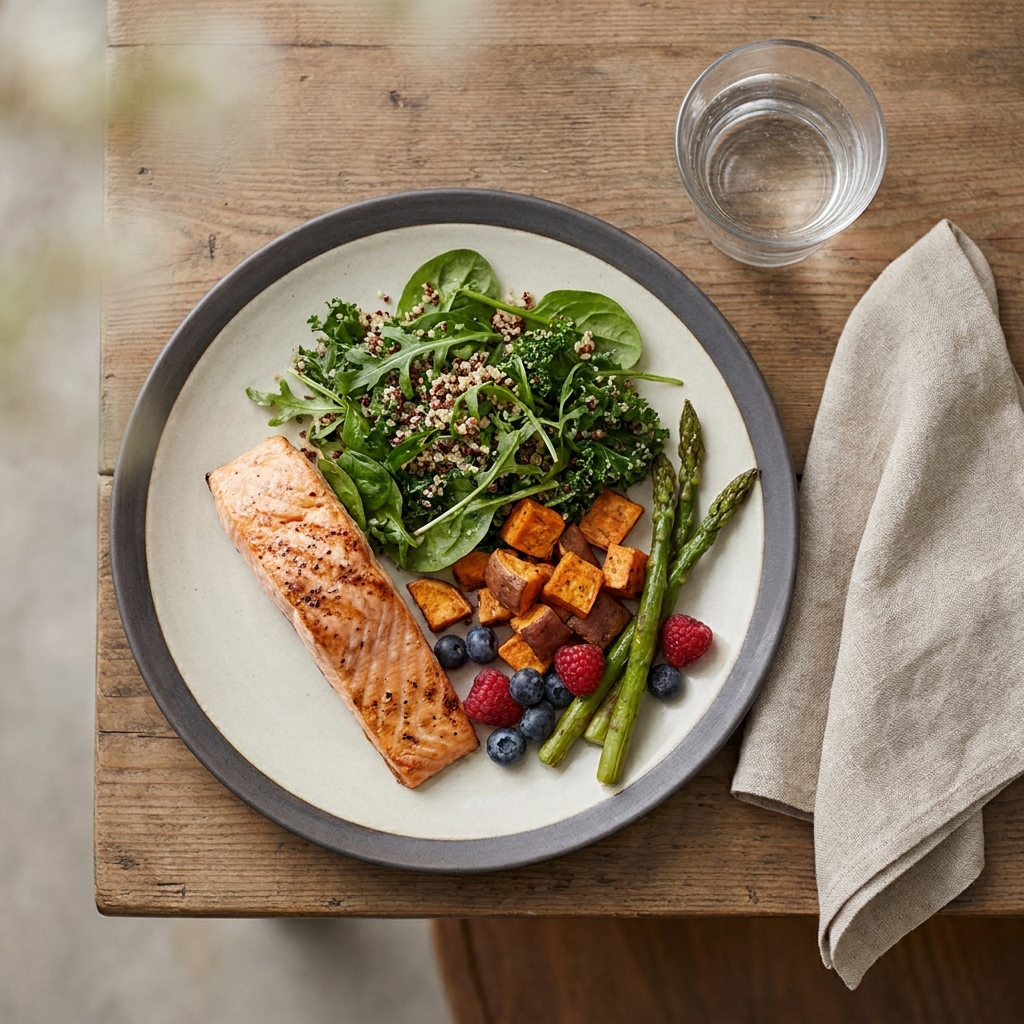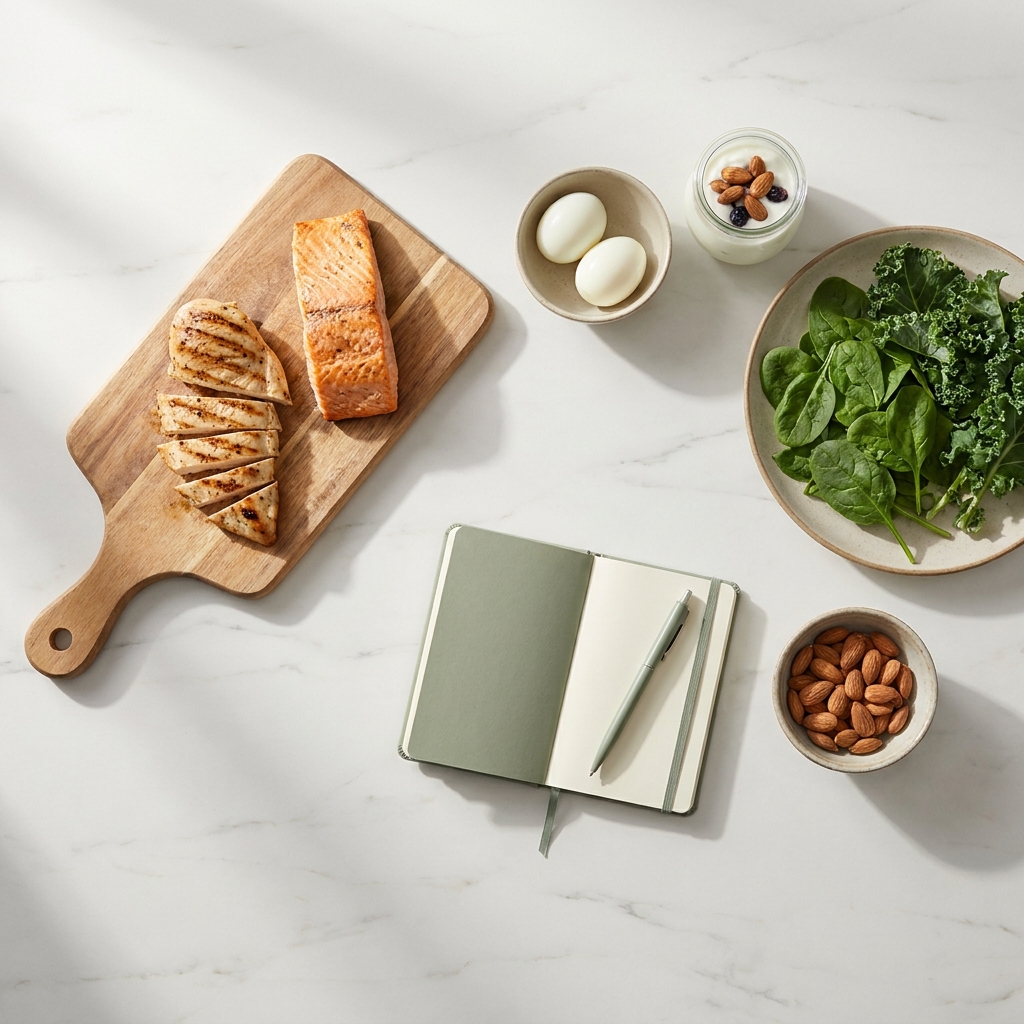
Many busy adults have heard about GLP-1 medications and are curious about them. They are not yet ready for a prescription conversation, and they want to know whether diet alone can do something similar first. They are far from alone. A 2025 RAND survey found that 14% of U.S. adults are interested in GLP-1 drugs but not using them. Virta Health’s 2026 survey found that cost (58%) and concerns about changes in facial appearance (43%) were among the top deterrents. Starting with nutrition is a common and rational choice. It is not avoidance.
This article does not offer another list of “foods that boost GLP-1.” It lays out a structured eating framework grounded in physiology: protein timing, fiber, fat quality, meal order, and circadian timing. It is also clear about scale. Diet-triggered GLP-1 release is real and measurable, but it is modest compared with medication. Red Mountain offers this as education for people in the research phase. It is not a pitch for a “natural alternative.”
How Food Actually Triggers GLP-1 Release
Meet the L-Cell: Where GLP-1 Comes From
GLP-1 is made by intestinal L-cells. These cells are concentrated in the distal small intestine and the colon, and they release GLP-1 when nutrients pass through the gut. The hormone signals fullness, slows stomach emptying, and helps regulate blood sugar. This is normal digestive signaling. It is different from pharmaceutical receptor agonism.
The Fiber–SCFA–L-Cell Pathway
The claim that “fiber boosts GLP-1” has a specific mechanism behind it, though most content skips the explanation:
- Fiber reaches the colon undigested.
- Gut bacteria ferment it into short-chain fatty acids (SCFAs).
- SCFAs bind to free fatty acid receptors on L-cells, which prompts them to secrete GLP-1.
In one line of research, 20g per day of oligofructose (an inulin-type prebiotic fiber) significantly raised post-meal GLP-1. Researchers have not yet established how much everyday fiber is “enough” to produce this effect in humans.
Why Scale Matters From the Start
In Mediterranean-diet research, peak GLP-1 reached roughly 59 pg/mL. That is a modest physiological range. GLP-1 medications, by contrast, keep the receptor engaged continuously. This difference is not a reason to give up on food. It is the honest baseline that a realistic plan has to start from.
The Three Core Dietary Levers That Influence GLP-1
These work best as levers a person can pull, not as a fixed list of foods.
Protein: The Strongest Single Trigger
In animal research, a protein-enriched diet raised GLP-1, while a protein-free diet did not raise it at all. In a randomized crossover trial, a 10g whey protein microgel drink taken before a meal increased total GLP-1 secretion by 66% and lowered post-meal glucose. The practical lesson is that eating protein at the start of meals matters, not only total daily protein.
Fiber: Beans, Vegetables, Whole Grains, Nuts and Seeds
Fiber is the best-documented nutrient for raising GLP-1 naturally. It stimulates L-cells directly and also feeds SCFA production through fermentation. Fermented foods such as yogurt, kefir, kimchi, and sauerkraut add a related pathway through the microbiome. One report found that eating a cup of yogurt daily raised fasting GLP-1 more than calorie restriction alone.
Monounsaturated Fats: Olive Oil Over Butter
In one study, GLP-1 was higher after people ate bread with olive oil than after bread with butter. The takeaway is about swapping fats, such as choosing olive or avocado oil over butter. It does not mean that more fat is better.
Meal Sequencing: Why Eating Order Changes the Hormonal Response
The Mechanism: Protein and Fiber Before Carbohydrates
Eating protein, fat, or fiber before carbohydrates stimulates noticeably more GLP-1 than eating carbohydrates first. It also blunts the post-meal rise in glucose and insulin. A systematic review in Clinical Nutrition Research found that changing meal order consistently reduced post-meal glucose, partly through slower stomach emptying and greater GLP-1 secretion. Guidance from Ohio State University and UCLA Health agrees that protein and fiber before carbohydrates is the most effective order.
A Practical Sequencing Framework
Within a single meal:
- First: vegetables or other fiber (a salad or a non-starchy vegetable)
- Second: protein and healthy fat (fish, chicken, or legumes with olive oil)
- Last: starches (rice, bread, or pasta)
Circadian Timing: Why Eating Schedule Matters, Too
GLP-1 secretion follows a circadian rhythm. The same meal produces a stronger GLP-1 response earlier in the day than it does around 5 p.m. or later. In practice, this means making earlier meals larger and richer in protein, and keeping dinner lighter and simpler. Timing is a factor that can be adjusted, not a strict rule.
Building the Day: A GLP-1-Supportive Eating Framework
Morning: Protein-First to Set the Tone
Breakfast is a good place to start with protein, such as eggs, Greek yogurt, or cottage cheese. Pairing it with berries or seeds adds fiber, which is a better start than refined carbohydrates on their own. This meal benefits from both the protein lever and the morning timing advantage.
Midday: The Largest, Most Sequenced Meal
Lunch works well as the anchor meal of the day and is the easiest place to apply the full sequence: vegetables, then protein and fat, then any starch. Olive oil dressings and avocado fit naturally here.
Evening: Lighter, Earlier, Simpler
Where possible, dinner should be earlier and lighter while still built around protein and fiber. This matches the reduced GLP-1 response later in the day and supports digestion. A heavier late meal does not make up for that reduced response.
Snacking and Consistency
Snacks can reinforce fiber and protein. Nuts, seeds, and fermented dairy are better choices than grazing on refined carbohydrates. These are directional habits rather than a rigid protocol, and consistency matters more than perfection.
What Food Can’t Do: An Honest Look at the Scale Gap
Diet-Alone Results vs. Medication-Driven Results
Diet and lifestyle changes alone typically produce modest results, roughly 3–5% of body weight over one to two years. Clinical research on medication-based approaches has documented substantially larger and more consistent results. The gap comes from different mechanisms. Food produces a modest response with each meal, while medication keeps the receptor activated continuously.
The “Food Noise” Gap: Behavior vs. Biochemistry
“Food noise” refers to persistent, intrusive thoughts about food, and it is now a peer-reviewed concept. Evidence suggests that GLP-1 medications act on both the hypothalamic appetite centers and the brain’s reward circuitry. Whole-food strategies cannot fully replicate that dual effect. This helps explain why diet-only approaches often feel like hard work for many people.
Why Viral “Natural GLP-1” Trends Don’t Hold Up
Viral trends such as gelatin drinks and unproven supplements have been publicly scrutinized by physicians in 2026 news coverage. Physicians have described them as nowhere near the territory of pharmaceutical GLP-1 agonists. Whole-food nutrition based on physiology is the credible and sustainable natural approach. Supplement hacks are not.
Who This Framework Is For, and When to Consider More
This structure is a legitimate starting point for metabolic health, steadier blood sugar, and better satiety. Those benefits stand on their own. Clinical trials increasingly study diet strategies, such as protein intake and nutrition counseling, as a complement to GLP-1 therapy rather than a replacement for it. Nutrition and medical support can work together.
It may be time for a broader conversation if a person notices any of the following:
- A plateau despite consistent effort
- Persistent food noise
- Metabolic changes that seem disconnected from diet and exercise
A metabolic assessment is a way to gather information. It is not a commitment to medication. At Red Mountain, medication is one tool among several. Nutrition structure, hormone function, and long-term monitoring are all part of metabolic correction.
Conclusion: Structure Is the Real Lever You Control
The useful question is not which foods boost GLP-1. It is how to structure a day: protein first, fiber for SCFA production, smarter fat choices, deliberate meal order, and earlier eating. Food-triggered GLP-1 is real physiology worth using on purpose. It also works at a different scale than medication. Both statements are true. Starting with diet while feeling hesitant about medication is a reasonable, informed choice.
Next Step: Understanding the Body’s Metabolic Picture
Some readers will want to understand how their own metabolism, hormones, and eating patterns interact. For them, a metabolic assessment is usually the next step discussed in a consult. Its purpose is clarity, not a push toward a prescription. The goal is sustainable metabolic health over the long term, not a quick fix or a “natural alternative” promise.