Most advice about a diet high in protein for weight loss treats “high” as a marketing adjective rather than a measurable threshold. That vagueness has a real cost. During caloric restriction, roughly 25% of the weight lost is typically fat-free mass, including skeletal muscle, and protein intake is the primary nutritional lever for limiting that loss.
This article defines “high” using the 2025 joint advisory from the American College of Lifestyle Medicine, American Society for Nutrition, Obesity Medicine Association, and The Obesity Society. It then shows why the same label translates into different gram targets for someone on a GLP-1 medication, a perimenopausal or menopausal woman, and a general dieter. The result is a nutrition target tied to measurable outcomes: lean mass retention and resting metabolic rate.
Why the Standard ‘High Protein’ Rule of Thumb Falls Short
The familiar guidance of 15 to 30 grams of protein per meal, or 10 to 35% of calories, is a reasonable starting point for the general population. Its limitation is that it does not adjust for body weight, the size of the calorie deficit, medication status, or life stage. A 25-year-old dieter and a 55-year-old GLP-1 patient receive identical advice.
The dose matters. An analysis of the International Weight Control Registry found that higher protein intake was associated with lower body weight and more favorable body composition (lower body fat percentage, higher muscle percentage) during purposeful weight loss. To apply that finding, people need a range in grams per kilogram and grams per day.
The Clinical Definition: What the 2025 Joint Advisory Actually Recommends
The 2025 joint advisory represents the highest-authority US multi-society consensus on nutrition during active weight reduction. Its core recommendation is 1.2 to 2.0 g/kg/day, based on adjusted body weight, during major weight reduction.
“High” also has guardrails:
- Floor: intake should not fall below 0.4 to 0.5 g/kg/day, which risks muscle atrophy.
- Ceiling: intake should not remain above 2 g/kg/day long-term, due to potential adverse effects.
- Simplified option: an absolute target of 80 to 120 g/day works for people who prefer not to calculate.
Adjusted body weight matters because fat tissue requires far less protein to maintain than muscle. Dosing by total body weight in someone with excess adiposity can overshoot real needs, so clinicians use an adjusted figure that better reflects lean tissue.
The International Society of Sports Nutrition reaches a similar conclusion from a different field, recommending 1.4 to 2.0 g/kg/day for maintaining muscle in exercising individuals.
Why the Same ‘High Protein’ Label Means Different Things for Different People
Three people searching the same phrase need three different numbers because their risk of losing fat-free mass differs. The ranges below are general, educational figures from clinical literature, not an individualized prescription.
For the Person on a GLP-1 Medication
Real-world data reveal a clear adequacy gap. Among GLP-1 medication users, only 43% consumed at least 1.2 g/kg/day of protein, just 10% reached 1.6 g/kg/day, and just 5% reached 2.0 g/kg/day.
Appetite suppression reduces total food intake, including protein, which can increase the share of weight lost from lean mass. The evidence is nuanced: some reviews suggest a meaningful portion of weight loss may come from lean mass when protein and resistance training are neglected, while more rigorous reviews find the loss is primarily fat when both are adequate. Protein intake is the variable that shapes which outcome occurs.
Older users show greater proportional lean mass loss, and fatigue-related drops in activity further reduce the stimulus for muscle protein synthesis. The practical floor is above 1.2 g/kg/day, evenly distributed across meals and paired with resistance training, trending higher when appetite allows. The medication is a tool for creating a deficit; protein and structure determine what that deficit removes.
For the Perimenopausal or Menopausal Woman
Estrogen decline drives “anabolic resistance,” meaning the protein intake that preserved muscle at 35 may be insufficient at 55. One longitudinal cohort found a 0.6% annual decline in muscle mass after menopause, and each 0.1 g/kg increase in daily protein reduced that drop by 0.62 kg.
PROT-AGE-style guidance suggests 1.0 to 1.2 g/kg for maintenance, rising to 1.4 to 1.6 g/kg during resistance training or active weight loss. In a 20-week randomized trial, women eating 1.2 to 1.5 g/kg/day lost a smaller proportion of weight as lean mass than those eating 0.5 to 0.7 g/kg/day, with similar fat loss. Protein changed the composition of the loss.
Emerging 2026 research adds a quality dimension: in postmenopausal women, shifting from animal toward plant protein was associated with greater weight loss even when total protein and calories were unchanged. This life stage also carries elevated risk of sarcopenic obesity (excess adiposity with low muscle mass), a phenotype flagged in GLP-1 guidelines as requiring deliberate protein and resistance-training strategy.
For the General Dieter
Someone without elevated risk factors (not on a GLP-1 medication, premenopausal, exercising regularly) can target 1.2 to 1.6 g/kg/day, or 80 to 120 g/day. A larger calorie deficit or higher training volume justifies the upper end, consistent with the ISSN’s 1.4 to 2.0 g/kg guidance. Either way, it is a number to calculate and track.
What a Full Day at a High-Protein Threshold Actually Looks Like
Distribution matters as much as total intake. Muscle protein synthesis is maximized at roughly 0.25 to 0.4 g/kg per meal (about 20 to 40 g for most adults), with 25 to 30 g needed to reach the leucine threshold of approximately 2.5 to 3 g. Spacing protein across three to four meals every three to four hours supports lean mass retention better than one large dinner.
Mapping Grams to Meals
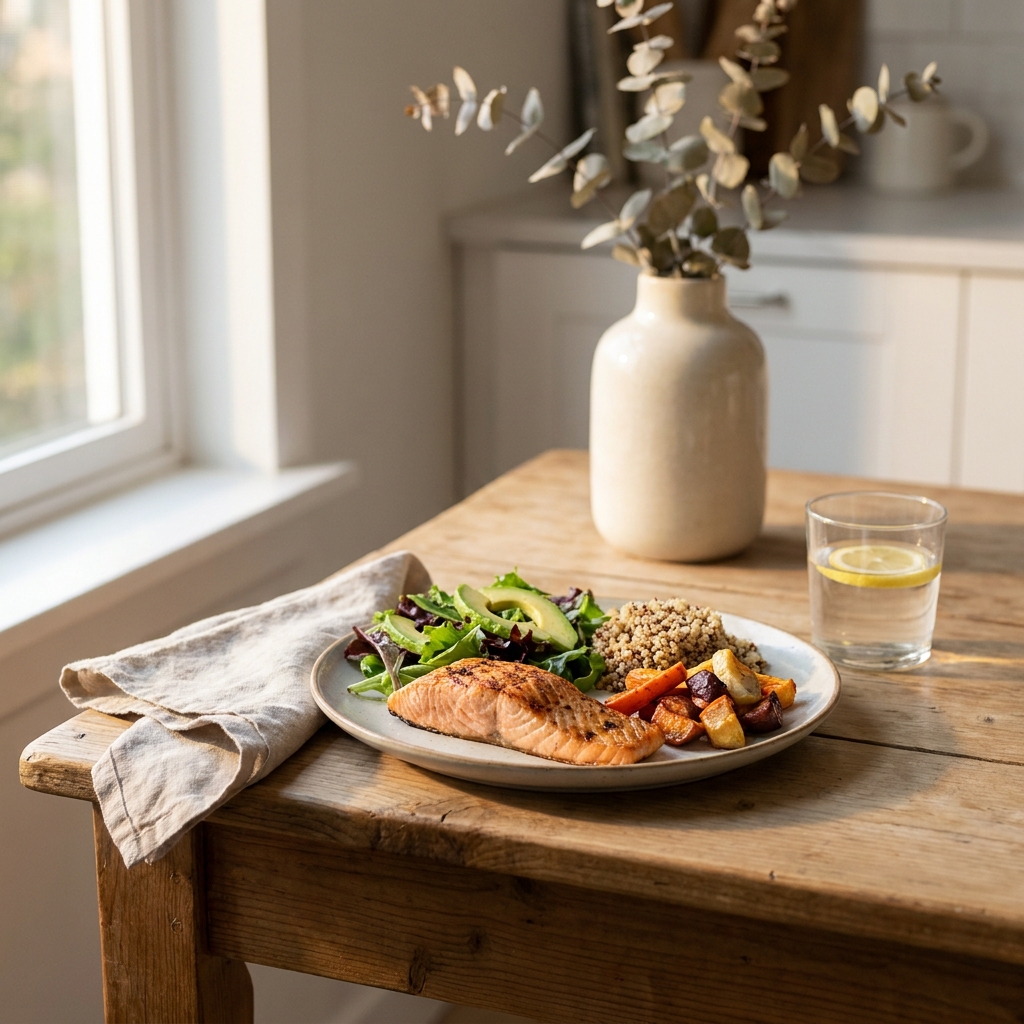
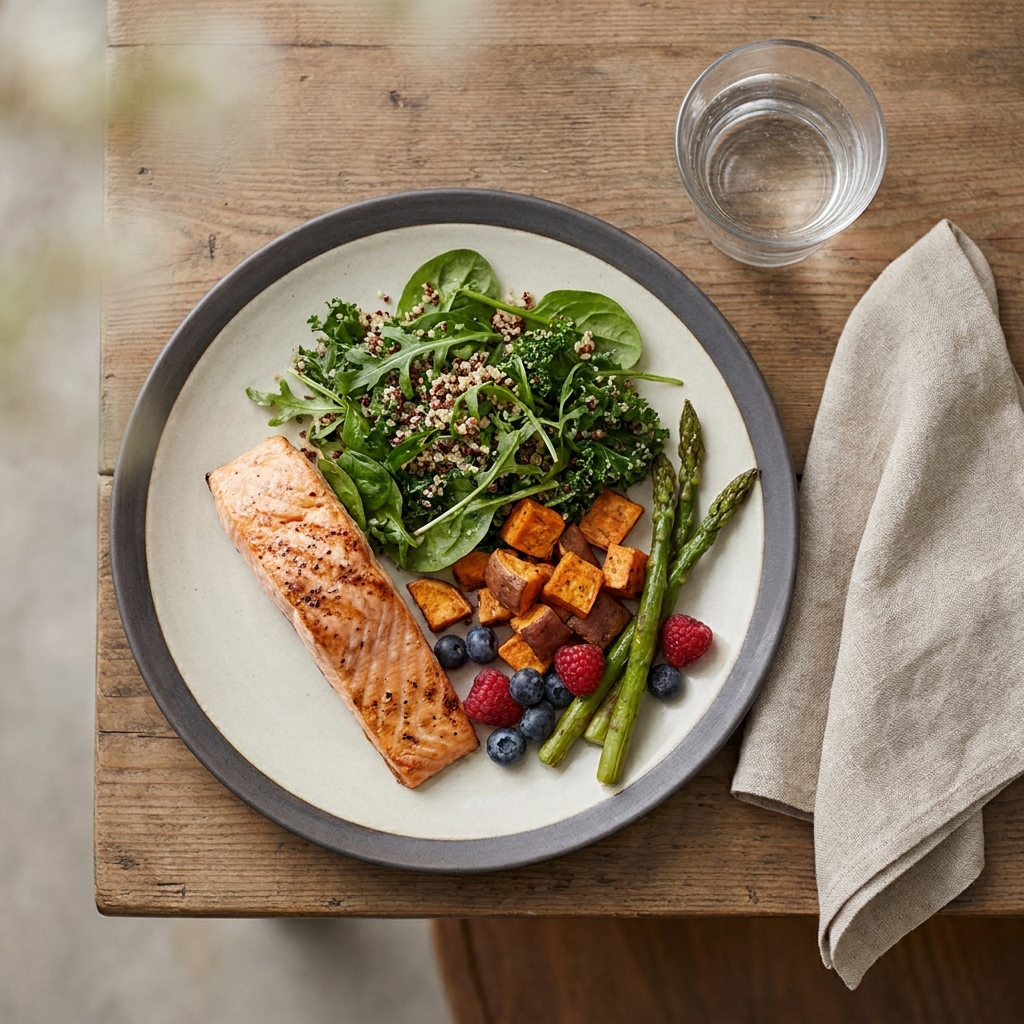
An illustrative day targeting 100 to 120 g:
- Breakfast: 25 to 30 g
- Lunch: 25 to 30 g
- Dinner: 25 to 30 g
- Snack or fourth meal: 20 to 25 g
This corrects a common pattern: carbohydrate-heavy breakfasts and protein-heavy dinners that miss morning and midday synthesis opportunities. Older adults and postmenopausal women may need 35 to 40+ g per meal (closer to 3 to 3.5 g leucine) to overcome anabolic resistance. For GLP-1 users with reduced appetite, smaller protein-dense occasions, such as a shake or compact high-protein plate, can close the gap. A clinician or dietitian can personalize these targets.
Why Protein Outperforms Other Macronutrients for Fat Loss
- Thermic effect: Protein requires more energy to digest than carbohydrate or fat, and controlled feeding studies show this rises with intake.
- Satiety: Protein is the most satiety-inducing macronutrient, partly through increased GIP and GLP-1 secretion and reduced ghrelin.
- Protein leverage: Humans regulate protein intake more tightly than calories. Protein-diluted diets, common with ultra-processed foods, can drive overconsumption until a protein target is met. The goal is protein density, not simply more food.
These mechanisms explain why a sufficient gram target, rather than adding protein where convenient, produces the body composition benefit.
Why Muscle Preservation Is the Real Point
Muscle is metabolically active tissue, so preserving it protects resting metabolic rate. Lean tissue lost during dieting is a key driver of later regain, making muscle preservation a maintenance strategy. Protein supplies the building blocks; resistance training signals the body to use them. Together, they turn a sound nutrition strategy into a lasting functional outcome: a protected metabolic rate and preserved muscle mass.
Getting the Number Right Is a Clinical Question, Not a Guess
Adjusted body weight, medication status, life stage, and activity level all shift the right target. Accurate self-tracking is genuinely difficult, which is why adequacy gaps persist even among motivated patients.
As a clinically-led practice with more than 30 years of patient outcomes, Red Mountain’s in-person providers can calculate an individualized target, monitor body composition over time, and pair nutrition strategy with resistance training, hormone optimization where appropriate, and support for patients on GLP-1 medications. Each is a tool working within a larger structure.
Conclusion: Make ‘High Protein’ a Number You Can Act On
“High protein” means 1.2 to 2.0 g/kg/day of adjusted body weight, or roughly 80 to 120 g/day, adjusted for individual risk. The goal is favorable body composition and a protected metabolic rate: the difference between weight loss that lasts and weight loss that reverses. Even distribution across the day matters as much as the total.
Next Step: Get a Personalized Number
For readers who want an individualized target rather than a general range, a clinical consult is usually the next step. That is where adjusted body weight, medication status, and muscle-preservation strategy are assessed together instead of estimated from an article.