Many people researching GLP-1 medications are not ready for a prescription. Some are hesitant, some are curious, and some are simply trying to understand their options. Their shared question is whether nutrition can deliver what these medications are known for: satiety, appetite control, and steadier blood sugar.
They are far from alone. According to Virta Health’s 2026 survey, 61% of Americans say they would prefer to change their behavior rather than take a prescription medication for weight loss.
This article is not another list of “natural” foods. It explains the biology involved (fiber, fats, meal sequencing, eating speed, and chewing) and is honest about where food reaches its limit. Throughout, one idea holds: nutrition is a legitimate tool that can be used before, alongside, or after medication. It is not a competing path.
What GLP-1 Actually Is, and Why Food Can Influence It
GLP-1 (glucagon-like peptide-1) is a hormone the gut produces naturally in response to eating. It helps signal fullness, supports insulin release, and contributes to blood sugar regulation. The body makes it every day, with or without a prescription.
GLP-1 medications act on this same pathway, but at a strength and duration that food cannot reach. The distinction matters: diet stimulates the body’s own release, while medication sustains activity at pharmaceutical levels.
Still, research shows that what, how, and when a person eats can measurably change how much GLP-1 the gut releases after a meal.
The Mechanisms: How Specific Foods and Eating Behaviors Stimulate GLP-1
Most content on this topic lists foods. The more useful question is why certain foods and habits work.
Fiber and the Gut Fermentation Pathway
Fiber from beans, vegetables, whole grains, nuts, and seeds is the most notable nutrient shown to raise GLP-1. When gut bacteria ferment fiber, they produce short-chain fatty acids, which stimulate GLP-1 secretion directly in the gut lining.
This is a biological process, not a supplement claim. The lever is consistent whole-food fiber intake, not an extracted fiber pill.
Monounsaturated Fats: What the Pistachio and Olive Oil Trials Show
Several controlled studies point to monounsaturated fats:
- Prediabetes: A randomized crossover trial published in Diabetes Care found a pistachio-rich diet significantly reduced fasting glucose, insulin, and insulin resistance, with GLP-1 increasing compared to the control diet.
- Gestational diabetes and impaired glucose tolerance: Women showed significantly higher GLP-1 levels at 90 and 120 minutes after eating pistachios versus whole wheat bread.
- Type 2 diabetes: A Mediterranean diet using olive oil improved GLP-1’s protective action on endothelial function and increased GLP-1-induced insulin secretion compared to a low-fat control diet.
The thread connecting these findings: monounsaturated fats from sources like olive oil and avocado oil appear to support both GLP-1 release and how effectively the body responds to it.
Meal Sequencing: Why Order of Foods Matters
Eating vegetables before carbohydrates raises the GLP-1 response compared to the reverse order or a mixed order. Food structure also plays a role: in one study, eating shredded cabbage raised GLP-1 more than drinking the same cabbage pureed.
The practical principle is that the mechanical and digestive process of eating, not just the ingredients, shapes hormone response.
Eating Speed and Chewing: The Overlooked Variables
Slower eating and thorough chewing give the gut-brain signaling loop time to register fullness and release GLP-1 before overeating occurs. These levers cost nothing, require no product, and complement good food choices immediately.
The Honest Ceiling: What Diet Alone Cannot Do
Diet-driven GLP-1 increases are real, but they are modest. As researchers writing in The Conversation noted, “the magnitude is far less than what is achievable with medications.” One Mediterranean diet study recorded a peak GLP-1 level of only about 59 picograms per millilitre of blood serum, a fraction of what medication can sustain.
Duration matters as much as peak level. A meal produces a temporary rise; medications are designed to keep GLP-1 activity elevated for far longer throughout the day. No meal plan can replicate that.
People should also be cautious about “natural GLP-1 booster” supplements. No supplement has randomized-trial evidence for quieting food noise or producing anything close to the results associated with approved medicines.
Why So Many People Are Trying Diet-First, and What Gets in the Way
Gallup’s 2026 data shows only 11% of U.S. adults currently take a GLP-1 medication for weight loss, and 15% have ever used one. Most people are still navigating this decision without medication.
Among those who stopped, the most common reasons were cost (36.1%), side effects (33.3%), and lack of insurance coverage (28.2%). Up to 40% of users report nausea, vomiting, constipation, or diarrhea, and studies note concerns about nutritional deficiencies and lean body mass loss. These realities explain why a food-first or food-alongside approach appeals to many.
“Food noise,” the persistent mental chatter about food, adds nuance. A 2026 national survey found that people reporting a recent loss of control over eating had nearly six times the odds of frequent food noise, a far stronger link than GLP-1 use itself. Regular protein- and fiber-rich meals, sleep, stress management, and mindful eating can lower that volume for many people, independent of medication status.
Where Nutrition Strategy Actually Fits: A Continuum, Not a Competition
Red Mountain treats nutrition strategy as a Foundation-stage tool, not an alternative to medication. That reframe rejects the “diet versus drug” binary that much of the conversation implies.
Before Medication: Testing Food-First as a Legitimate Starting Point
For medication-hesitant individuals, a structured approach (fiber-forward, rich in monounsaturated fats, thoughtfully sequenced) is a reasonable first step. Done well, it requires real strategy and clinical guidance rather than guesswork.
Alongside Medication: Protecting Muscle and Nutrient Balance
Patients taking a GLP-1 medication still benefit from deliberate fiber, protein, and fat strategy. Red Mountain’s programs are designed to help minimize side effects, preserve muscle mass, and maintain nutrient balance. Medication can be a useful tool, but the structure of nutrition coaching and ongoing clinical guidance is what supports lasting results.
After Tapering: Sustaining Results Without the Drug
When medication is reduced or stopped, the body’s own GLP-1 mechanisms become a primary lever again for satiety and blood sugar stability. Within Red Mountain’s Longevity and Maintenance stage, this is how patients protect the investment they have already made.
Building a GLP-1-Supportive Plate: A Practical Framework
The research translates into a few guiding principles:
- Lead with fiber and vegetables.
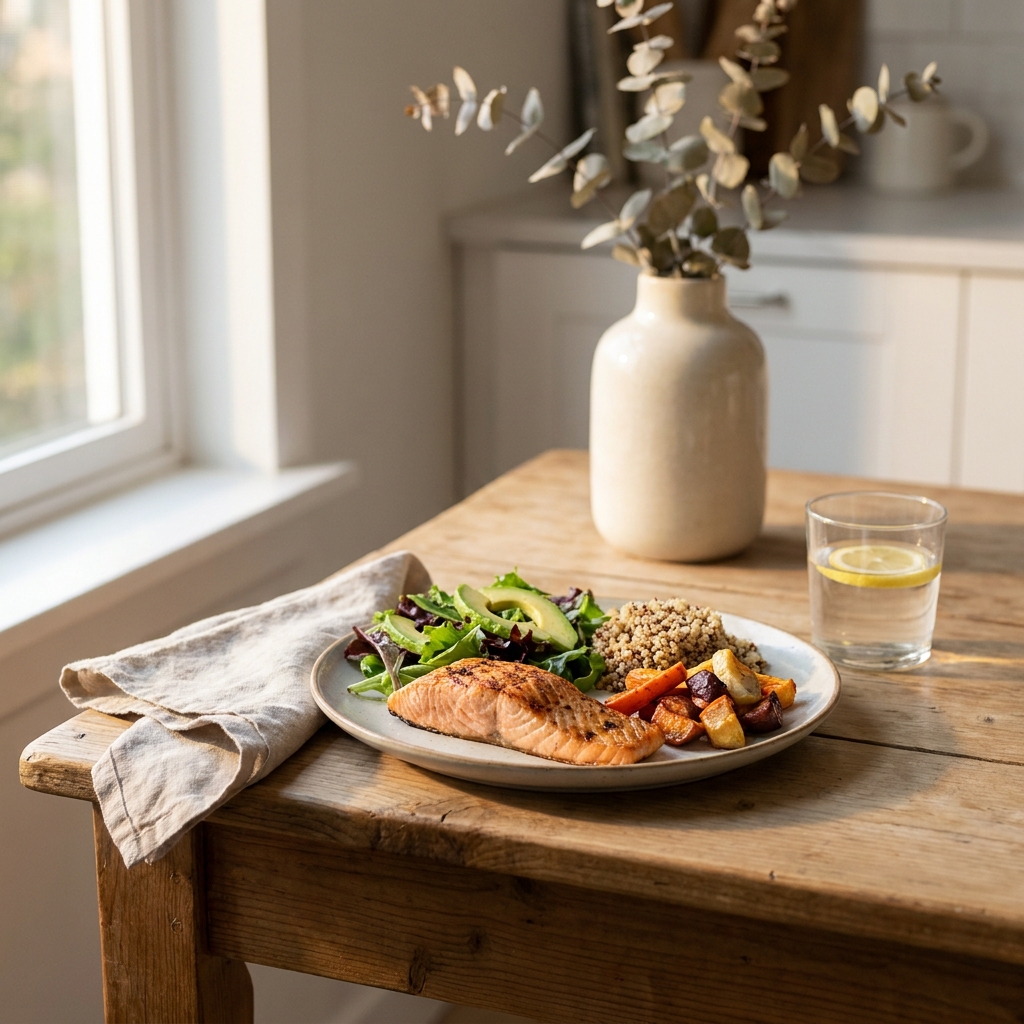
- Include a monounsaturated fat source, such as olive oil, avocado oil, or nuts.
- Sequence vegetables before carbohydrates.
- Eat more slowly.
- Chew thoroughly and favor whole, textured foods.
This is a strategy, not a rigid meal plan. Applying it well depends on individual health history, labs, and preferences, which is where Red Mountain’s nutrition coaching turns research into personalized practice.
When Food Alone Isn’t Enough, and How to Know
Some people will do everything right nutritionally and still see limited change. This is common, particularly with significant insulin resistance or metabolic dysfunction, and it is not a personal failure.
Medical evaluation is simply the next step on the continuum. Red Mountain begins with metabolic assessment and labs to determine whether nutrition strategy alone, medication, or a combination fits a given person.
Conclusion: Food as a Real Tool, Not the Whole Answer
Fiber, monounsaturated fats, meal sequencing, eating speed, and chewing all have research-backed effects on the body’s own GLP-1 production. Those effects are real but modest, and no food or supplement replicates drug-level magnitude.
Nutrition strategy is foundational whether someone is medication-hesitant, currently on a GLP-1 medication, or tapering off one. After more than 30 years of patient care, Red Mountain’s view is consistent: structure, coaching, and clinical guidance, not any single tool, sustain results over the long term.
Next Step: Finding Out What the Body Needs
For anyone unsure whether diet alone is enough, a conversation is more useful than guesswork. Determining the right starting point is exactly the kind of question Red Mountain helps patients answer in a consult, beginning with metabolic assessment and nutrition coaching, with medication available as one of several tools if and when it is appropriate.