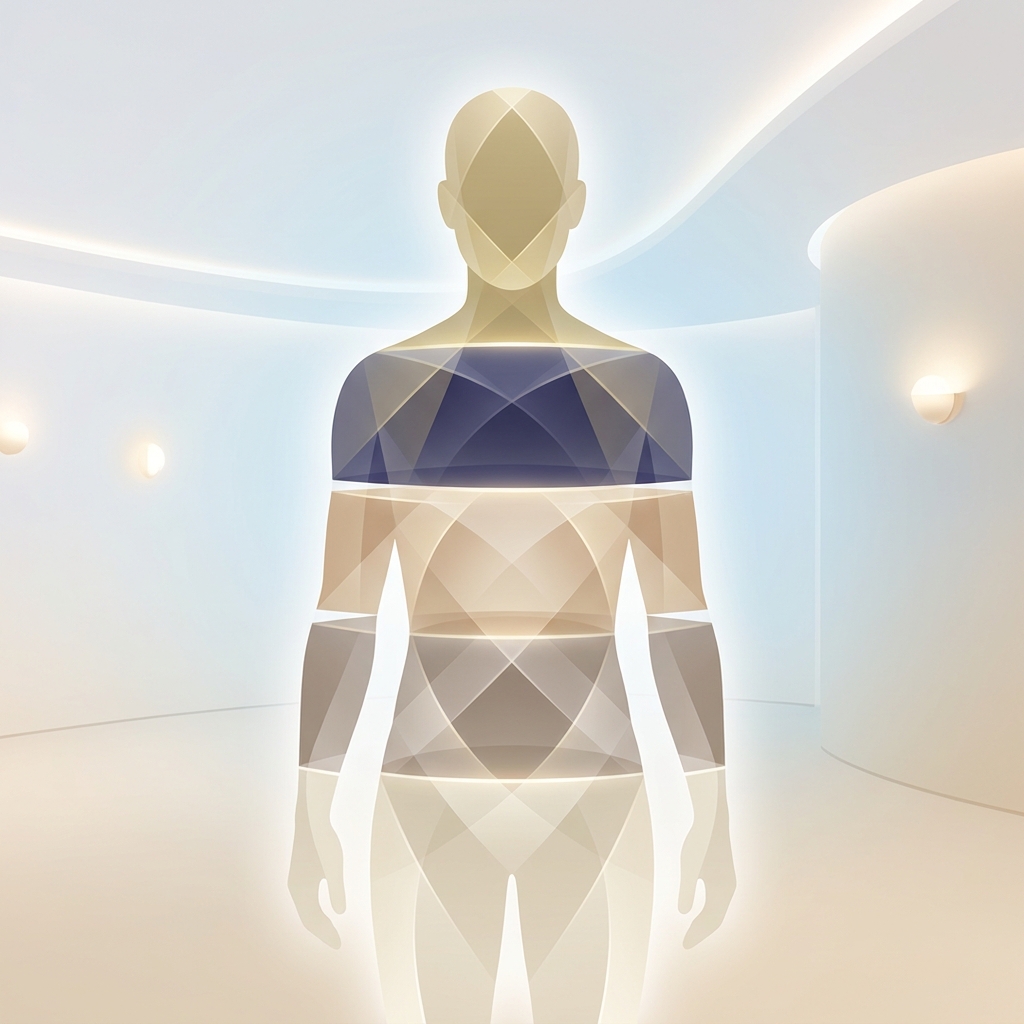

Picture two people standing on the same scale. Same height, same weight, same body mass index. By every conventional measure, they appear to be in identical health. Yet one of them is metabolically healthy, and the other is quietly accumulating the kind of fat that drives type 2 diabetes and cardiovascular disease. The difference between them is invisible to the scale, invisible to BMI, and invisible to the smart device on the bathroom floor.
This is the gap a DEXA scan closes. Dual-energy X-ray absorptiometry is not a fitness gadget or a curiosity reserved for athletes. It is a clinical diagnostic that reveals metabolic risk no scale, BMI calculation, or consumer device can detect.
The central idea of this article is simple: a DEXA scan is a starting point, not an endpoint. The machine produces precise numbers, but it is the clinical interpretation of those numbers that makes them useful. What follows covers what DEXA actually measures, how to read the metrics that matter, what they reveal about metabolic health, and why a clinical team matters more than the printout.
This shift is no longer fringe thinking. In 2025, the Lancet Diabetes and Endocrinology Commission, a panel of 58 global experts, formally concluded that BMI alone is insufficient to diagnose obesity and that direct body fat measurement through imaging such as DEXA now belongs in the clinical standard.
What DEXA Actually Measures: A Precise Map, Not an Estimate
DEXA uses two low-dose X-ray beams at different energy levels to directly measure three distinct compartments: bone mineral density, lean soft tissue mass, and fat mass. The word that matters here is directly. Unlike bioelectrical impedance (BIA), smart scales, or skinfold calipers, DEXA does not estimate or infer. It measures each compartment independently.
It also breaks composition down by region. Fat and lean mass are reported separately for the arms, legs, and trunk, which allows detection of muscle imbalances, asymmetries, and localized fat distribution that whole-body numbers can never reveal.
Practically, the experience is undemanding. A scan takes 6 to 10 minutes, requires no needles and no clothing removal beyond metal items, and exposes a person to just 1 to 4 microsieverts of radiation, less than a single day of natural background exposure.
The accuracy is well documented. In 2025, a British Journal of Radiology study had 103 adults undergo both DEXA and CT scans on the same day; DEXA closely matched CT results for fat and lean mass in the limbs and abdomen. Institutions including UCSF and UC Davis Health endorse DEXA as a highly accurate method for tracking changes in muscle and fat.
Four key outputs deserve attention: body fat percentage, visceral adipose tissue (VAT), appendicular lean mass index (ALMI), and bone mineral density.
DEXA vs. Other Methods: Why Accuracy Differences Are Clinically Significant
This is not a product review. It is a question of clinical stakes. When a measurement is off by several kilograms of fat, every decision built on that measurement is off as well.
The numbers are plain. DEXA achieves ±1 to 2% accuracy for body fat percentage. BIA and InBody devices land at ±3 to 5%. The Bod Pod reaches ±3% under ideal conditions. A 2025 real-world study of 1,000 adults found that InBody underestimated fat mass by an average of 3.7 kg in men and 1.9 kg in women compared to DEXA, a gap large enough to misclassify metabolic risk.
BIA and smart scales are also unreliable for tracking change over time, because their results shift with hydration status, meal timing, and skin temperature. DEXA is not meaningfully affected by these variables. A 2024 review confirmed that DEXA achieves accuracy comparable to CT and MRI while offering lower cost, lower radiation, and faster scan times.
The real question is not which device is “better.” It is which tool produces data precise enough to inform a clinical decision.
Reading Your DEXA Results: The Metrics That Actually Matter
This is the interpretation layer, the part most providers and walk-in scan services skip. Body fat percentage is actually the least actionable number on the report. The metabolic story lives in the metrics below.
Visceral Adipose Tissue (VAT): The Fat You Cannot See or Feel
VAT is the metabolically active fat surrounding the internal organs in the abdominal cavity. It is distinct from subcutaneous fat, the fat under the skin that can be pinched. VAT is the most clinically significant number on a DEXA report because it predicts metabolic risk more strongly than BMI or total body fat percentage.
Research published in Circulation established VAT as an independent predictor of insulin resistance, cardiovascular disease, type 2 diabetes, hypertension, and non-alcoholic fatty liver disease. Clinical thresholds are typically set at a VAT area of 100 cm² (elevated cardiovascular risk) and 160 cm² (high risk).
This is also where the “skinny fat” phenomenon lives, formally called metabolically obese normal-weight (MONW). NIH-indexed research has shown that DEXA-derived VAT predicts impaired glucose tolerance and metabolic syndrome in people who would otherwise appear low-risk. Knowing the number only matters if a clinical team knows what to do with it.
Appendicular Lean Mass Index (ALMI): A Muscle Health Baseline
ALMI is lean mass in the arms and legs adjusted for height, and it is the primary clinical marker used to diagnose sarcopenia, the progressive loss of muscle mass and function that comes with aging. Sarcopenia is more than an aesthetic concern; it is an independent predictor of frailty, metabolic dysfunction, and early mortality. It affects 5 to 13% of adults over 60, and DEXA is the tool the International Society for Clinical Densitometry officially endorses for its assessment.
ALMI is not the same as total lean mass. It isolates the functional muscle in the limbs, which is more predictive of health outcomes than trunk lean mass. It also reveals sarcopenic obesity, the combination of high fat mass and low lean mass, and provides a baseline against which future scans can confirm whether resistance training, nutrition, and hormone optimization are actually preserving muscle.
Android-to-Gynoid Fat Ratio: Where Fat Is Stored Matters as Much as How Much
The android region is the abdomen and upper body; the gynoid region is the hips and thighs. The ratio between them indicates risk. An android-to-gynoid ratio greater than 1 is associated with increased metabolic and cardiovascular disease risk. Two people with identical body fat percentages can carry very different risk profiles depending on where that fat sits, another picture the scale simply cannot capture.
Bone Mineral Density: The Metric Most Body Composition Scans Ignore
Bone mineral density (BMD) is a unique DEXA output that most consumer tools treat as secondary. It belongs in a metabolic conversation because bone health is directly affected by hormonal change (particularly estrogen decline in perimenopause and menopause), nutritional status, and certain medications. Perimenopausal and menopausal women, individuals on long-term GLP-1 therapy, and older adults with sarcopenia all face elevated risk of bone loss. A clinical team should read BMD alongside VAT, ALMI, and fat distribution, not as a separate scan.
The “Skinny Fat” Problem: Why Normal Weight Is Not the Same as Metabolically Healthy
The MONW profile describes a person with a normal-range BMI, a healthy-looking scale weight, and no obvious external signs of excess fat who nonetheless carries elevated visceral fat and reduced lean mass. Standard screening misses this population systematically: BMI, waist circumference, and even BIA-derived body fat can all look normal while VAT is high and ALMI sits below clinical thresholds.
The scale of the gap is striking. A 2026 peer-reviewed analysis of 58,053 US adults found that applying the Lancet Commission’s excess adiposity criteria reclassifies obesity prevalence from 43% to 61%, meaning millions of people currently labeled “normal weight” or “overweight” are carrying clinically significant metabolic risk. The question was never what the scale says. It is what internal composition reveals about trajectory. This is exactly the population for whom DEXA is most valuable and most underutilized.
DEXA and GLP-1 Medications: Tracking What the Scale Cannot Show
GLP-1 medications are driving significant weight loss across a large and growing patient population, but the scale cannot distinguish fat loss from lean mass loss. Research indicates that without muscle-preservation strategies, 25 to 40% of weight lost on GLP-1 medications can be lean mass. Losing muscle during weight loss lowers metabolic rate, raises sarcopenia risk, and can leave a person lighter but metabolically worse off.
DEXA is what makes this kind of therapy clinically responsible. Serial scans allow a clinical team to see whether weight loss is coming from fat, muscle, or both, and to adjust nutrition, resistance training, and supplementation accordingly. The scan informs the protocol; the protocol is adjusted based on the findings; the next scan confirms whether the adjustment worked. The medication is a tool. The clinical structure around it is what makes the outcome sustainable.
DEXA as a Starting Point: How Clinical Teams Use the Data
A DEXA scan produces a report. A clinical team produces a plan. The interpretation workflow reviews VAT against risk thresholds, assesses ALMI against sarcopenia criteria, evaluates fat distribution, and integrates BMD, then connects all of it to lab work such as fasting insulin, CRP, testosterone, and leptin for a complete metabolic picture.
Those findings drive specific interventions. Elevated VAT may point toward metabolic intervention and dietary restructuring. Low ALMI may call for resistance training and protein optimization. Declining BMD may warrant hormone evaluation. This is the difference between walking out with a printout and walking out with direction.
At Red Mountain, DEXA findings feed directly into the Foundation stage of care, the metabolic assessment, and continue informing decisions across the Function stage (hormone optimization, muscle preservation) and the Longevity stage (ongoing monitoring and course correction). The scan is the foundation of a data-driven workflow, not a standalone product.
How Often Should You Get a DEXA Scan?
For most people actively managing metabolic health, every 3 to 6 months is appropriate. More frequent scans, even monthly, may make sense during active GLP-1 therapy, intense fat loss phases, or sarcopenia monitoring in older adults.
Serial scanning requires standardized conditions: consistent hydration, a fasting state, and the same time of day, to prevent lean mass distortion between sessions. This is a clinical detail that separates a medical practice from a walk-in fitness scan.
On cost: in 2026, body composition scans run $40 to $200 at wellness-focused providers and $150 to $400 at hospital-based facilities. They are generally not covered by insurance, though HSA and FSA funds can be applied, reducing effective cost by 25 to 35%. Bone density scans ordered for osteoporosis screening may be covered, which is a separate consideration. The more useful question is not the price of the scan but the cost of making nutrition, medication, exercise, and hormone decisions without accurate data.
Who Should Consider a DEXA Scan
This is guidance, not a sales pitch. DEXA is most clinically valuable for:
- Adults with a normal BMI who have metabolic risk factors such as a family history of diabetes, cardiovascular disease, or metabolic syndrome.
- Perimenopausal and menopausal women experiencing body composition changes despite stable weight.
- Adults over 50 concerned about muscle loss and bone health.
- Individuals on or considering GLP-1 therapy who want to monitor lean mass.
- Anyone who has lost significant weight and wants to understand what they actually lost.
The MONW population deserves specific mention: if weight and BMI look normal but central fat accumulation, a metabolic “off” feeling, or mismatched risk factors are present, DEXA is the tool most likely to reveal what is actually happening. It is not only for people with obesity. It is a metabolic baseline relevant across a wide range of body types. As clinical standards move toward requiring direct body fat measurement, DEXA moves from optional to foundational.
Conclusion: The Scan Is the Beginning
Return to the two people on the scale. With DEXA reports in hand, they no longer look identical. They have two completely different metabolic stories, and those stories lead to two completely different plans.
DEXA is not about knowing a body fat percentage. It is about understanding what visceral fat area, lean mass index, and regional composition reveal about a metabolic trajectory. The value is never the printout. It is what a clinical team does with the data.
The 2025 Lancet Commission’s move away from BMI-only diagnosis reflects a broader truth: metabolic health requires direct measurement, not inference. DEXA is the practical tool that makes that possible. Understanding these numbers is what a consult is for, and having a team that knows how to interpret and act on the full picture is what separates a diagnostic from a decision.
Ready to Understand What Your Body Composition Is Actually Telling You?
If what is described here sounds familiar, if the numbers have always looked fine but something still feels off, a clinical consult is usually where clarity begins.
At Red Mountain, that consult means reviewing body composition data alongside metabolic labs, discussing what the numbers mean for one specific health picture, and building a plan that addresses root causes rather than surface metrics. With more than 30 years of clinical experience, the team has seen these patterns before and knows how to act on them, not just how to explain them.
For those ready to move from data to direction, this is what Red Mountain does.
Red Mountain may prescribe a compounded version of a GLP-1. Compounded GLP-1s contain semaglutide or tirzepatide. Compounded GLP-1s have not been approved by the FDA or reviewed by the FDA for safety, effectiveness, or quality. Compounded GLP-1s have not been demonstrated to the FDA to be safe or effective for weight loss. Compounded GLP-1s manufacturing processes have not been reviewed by the FDA. FDA-approved products containing semaglutide and tirzepatide are available. Ask your provider for more information.