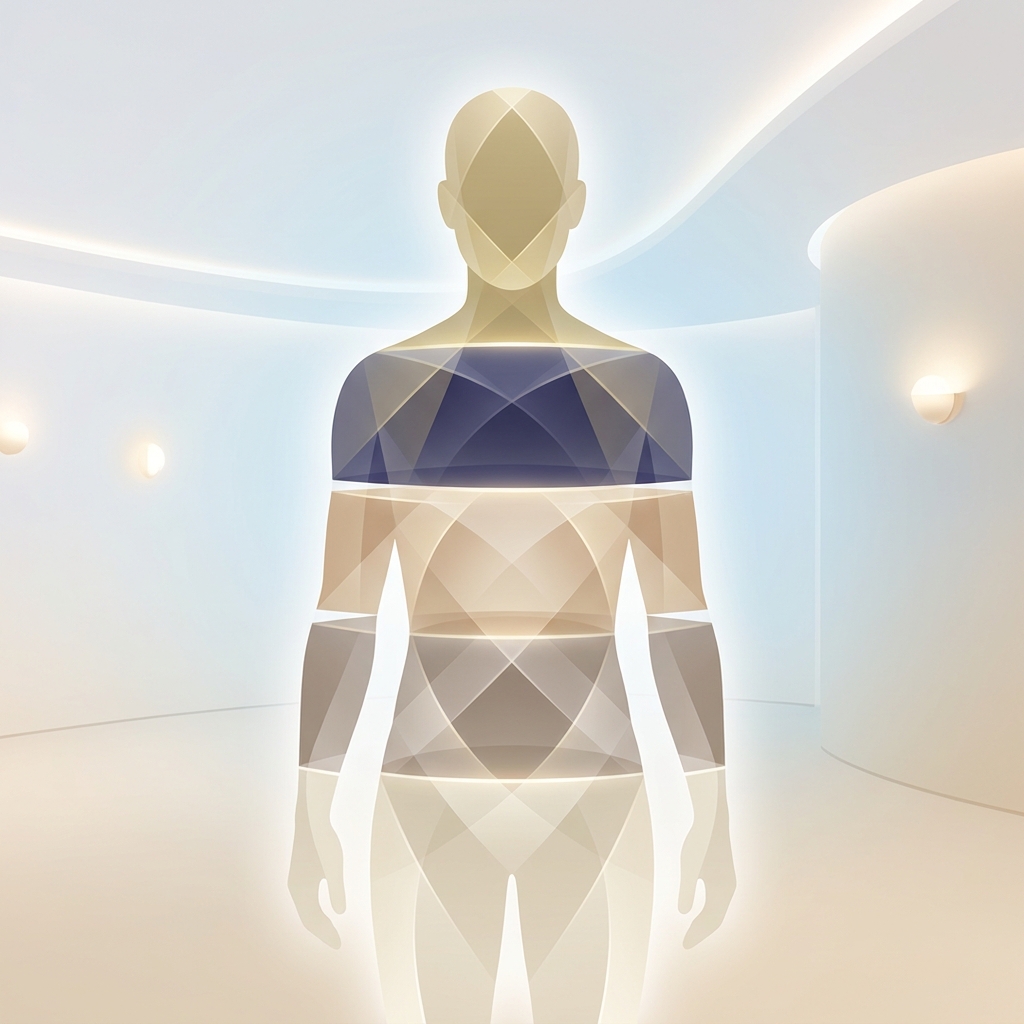
Two people can step on the same scale, see the same number, and have completely different health profiles. One may carry that weight as dense muscle and strong bone. The other may carry it as fat, much of it wrapped around internal organs. The scale cannot tell the difference. Neither can a BMI calculation.
This is the core limitation of traditional measurement: it tells a person how much they weigh, not what they are made of. A 2026 study of adults aged 65 and older confirmed that BMI fails to differentiate fat from lean tissue and does not capture visceral adiposity, the internal fat that carries far greater cardiovascular and metabolic risk than fat stored just beneath the skin.
The institutions that rely on accurate measurement are taking notice. As of January 1, 2026, the U.S. Department of Defense replaced its long-standing height-and-weight tables with waist-to-height ratio as the primary body composition standard across all branches. When a system built on precision abandons the old approach, it signals something meaningful: body composition metrics outperform traditional measures.
This article is not a simple method comparison. It is a guide to understanding body composition testing as a clinical decision: which method fits which goal, what to expect during a test, what the numbers mean, and how that data becomes actionable inside a structured program.
What Body Composition Testing Actually Measures
Body composition is the breakdown of total body weight into its distinct biological components: fat mass, lean or muscle mass, bone mineral content, and total body water.
The research gold standard is the four-compartment (4C) model, which separately quantifies all four. It is considered the most accurate in-vivo method available, but it requires multiple devices and roughly four hours per person, making it impractical for routine clinical use.
An important foundational point: no in-vivo technique is perfectly accurate. Every method is an estimate built on assumptions about how the body is structured. The only fully accurate measurement would be cadaver dissection. Understanding this helps patients interpret their results with appropriate perspective.
Methods also differ in what they can detect. Some capture visceral fat (the fat surrounding internal organs); others measure only subcutaneous fat. Some include bone density; others do not. Visceral fat measurement is a clinical priority because it is directly associated with type 2 diabetes, hypertension, non-alcoholic fatty liver disease, cardiometabolic disease, and mortality risk, independent of total body weight.
This is where the concept of “normal-weight obesity” becomes relevant. A person with a healthy BMI can still carry dangerous levels of visceral fat, which is why body composition testing matters even for those who are not overweight by traditional measures. The field is expanding rapidly: a 2025 review identified over 98,000 PubMed publications on human body composition, published at more than 4,700 per year over the past decade.
The Six Main Body Composition Testing Methods
Each method has a context in which it is the right tool. The goal is not to crown a winner but to match the method to the clinical question.
DEXA (Dual-Energy X-ray Absorptiometry)
DEXA uses low-dose X-ray beams at two energy levels to differentiate fat mass, lean mass, and bone mineral density across the entire body. It is widely regarded as the clinical gold standard, with an error margin of roughly ±0.5–2%. It uniquely measures visceral fat, regional composition (arms, legs, and trunk separately), and bone density at once, making it the most comprehensive single-device option.
The patient lies fully clothed on a flat table while a scanning arm passes overhead, taking about 10 to 20 minutes. Radiation exposure is extremely low, comparable to a few hours of natural background radiation. Cost typically runs $45 to $400 per session in 2026, usually out-of-pocket, since most insurance covers DEXA only for bone-density testing under specific conditions. DEXA is best suited for program onboarding, baseline assessment, monitoring lean mass during GLP-1 therapy, and sarcopenia screening in adults over 40. Methodological standards published in the American Journal of Clinical Nutrition in 2025 and 2026 establish DEXA among the validated clinical methods.
Bioelectrical Impedance Analysis (BIA)
BIA passes a low-level electrical current through the body and uses resistance to that current to estimate body water, lean mass, and fat mass. Its error margin (±4–10%) is meaningfully affected by hydration, food intake, recent exercise, and skin temperature.
Clinical-grade multifrequency devices (such as InBody) are substantially more accurate than consumer smart scales, and the AWGS 2025 Consensus Update recognizes multifrequency BIA as a validated tool for sarcopenia assessment. Consumer smart scales generally fall within ±3–8 percentage points of DEXA, useful for directional trends but not standalone clinical measurement. Cost ranges from $30 to $300, making it the most accessible clinical option. The patient simply stands on a platform or holds handles for a few minutes. One peer-reviewed 109-person study found high-frequency BIA correlated closely with DEXA for appendicular lean mass (β ≥ 0.95) and fat-free mass (β ≥ 0.98). Consistent preparation (avoiding strenuous exercise for 12 to 24 hours, fasting several hours, and maintaining normal hydration) is critical.
Hydrostatic (Underwater) Weighing
This method calculates body density by comparing weight on land to weight fully submerged. It offers high precision (±1.5–2%) and was a gold standard before DEXA. However, it requires full submersion, specialized tanks, and a complete exhale underwater, making it impractical for most clinical patients. Cost is $50 to $150, with availability largely limited to university exercise science programs.
Air Displacement Plethysmography (Bod Pod)
The patient sits inside an egg-shaped chamber while air displacement is used to calculate body volume and density. This is the same principle as hydrostatic weighing without the water. Accuracy is comparable, the experience is more tolerable, and cost runs $50 to $150. It remains limited to specialized facilities but is a reasonable alternative for patients who cannot tolerate submersion.
Skinfold Calipers
A trained technician measures subcutaneous fat thickness at multiple standardized sites, then enters those values into a formula. The error margin (±3.5–5%) depends heavily on technician skill, and results can vary significantly between testers. Critically, calipers cannot measure visceral fat, the depot most associated with disease risk. Cost ranges from $10 to $300. This method suits fitness settings but is not appropriate as a primary clinical tool.
3D Body Scanning
A non-contact scanner captures hundreds of measurements in seconds using infrared sensors or structured light, then estimates body fat and generates a 3D model. Its error margin (±4–6%) makes it better suited for visual progress and circumference tracking than clinical quantification. Cost is $30 to $50, and roughly 34% of fitness centers now use these systems. The global 3D body scanner market is estimated at $0.5 billion in 2026, projected to reach $0.89 billion by 2035. AI integration is advancing quickly, but clinical validation for medical decision-making remains limited.
Choosing the Right Method: A Clinical Decision Framework
The right test is determined by the clinical question being asked, not by convenience or cost alone.
- Starting a structured health or weight management program: DEXA establishes a precise baseline for fat, lean mass, and visceral fat.
- Monitoring lean mass during GLP-1 therapy: DEXA at baseline and regular intervals, with validated multifrequency BIA for more frequent interim checks.
- Screening for sarcopenia in adults over 40: Multifrequency BIA (validated per AWGS 2025) or DEXA.
- Chronic disease risk stratification: DEXA preferred for direct visceral fat measurement; validated BIA acceptable when DEXA is unavailable.
- Ongoing progress monitoring: Validated BIA or 3D scanning for trend data, interpreted against a baseline DEXA.
- Athletic performance: DEXA for precision; Bod Pod or hydrostatic weighing in specialized settings.
A consumer smart scale is a motivational tool, not a diagnostic one. It is not an appropriate starting point for clinical decision-making.
Body Composition Testing and GLP-1 Medications: A Critical Clinical Need
GLP-1 receptor agonists have become widely used for weight management, but the weight lost is not exclusively fat. Research indicates that lean body mass loss can account for a meaningful portion of total weight lost during GLP-1 therapy. That matters because losing muscle reduces metabolic rate, functional strength, and long-term maintenance capacity, and it is invisible on a standard scale.
An April 2026 systematic review in the International Journal of Obesity reinforced the need for compositional monitoring beyond scale weight. The clinical urgency is reflected in the BICEP Study (NCT07226947) at Massachusetts General Hospital, recruiting since November 2025, which uses BIA monitoring to study muscle-loss prevention during GLP-1 therapy.
A body composition baseline allows a clinician to distinguish fat loss from lean mass loss at each visit and to adjust nutrition strategy, resistance training, and protein targets accordingly. This is central to Red Mountain’s approach: programs designed to support patients on weight-loss medications, including helping minimize side effects, preserve muscle mass, and maintain nutrient balance, with body composition monitoring as a core component.
The clinical value of any GLP-1 medication depends on the structure and monitoring surrounding it. Body composition testing is part of that structure.
Body Composition Testing After 40: Sarcopenia, Hormones, and the Aging Body
After age 40, adults naturally begin losing muscle and gaining fat, often without any change in scale weight. Sarcopenia, the progressive loss of skeletal muscle mass and strength, is associated with falls, fractures, metabolic dysfunction, and increased mortality.
BMI misses this entirely. A person can hold the same weight for a decade while losing 10 pounds of muscle and gaining 10 pounds of fat, a clinically significant shift invisible without testing. The AWGS 2025 Consensus Update validates multifrequency BIA for muscle mass assessment with updated diagnostic cutoffs, expanding accessible options.
Hormonal change accelerates the process. Declining estrogen in perimenopausal and menopausal women drives fat redistribution toward the visceral compartment and accelerates lean mass loss; declining testosterone in men over 40 reduces muscle maintenance capacity. In this population, body composition testing is not a fitness metric. It is an early warning system for metabolic and functional decline. This is the data that informs Red Mountain’s Function stage, which focuses on restoring how the body works through hormone optimization and muscle preservation. For the woman who feels her body changed despite doing everything right, the feeling is not imaginary, and testing can quantify exactly what changed. Learn more about how menopause impacts weight, sleep, and mood and how these shifts connect to body composition changes.
What to Expect During a Body Composition Test
Before the Test: How to Prepare
- Avoid strenuous exercise for 12 to 24 hours, as intense activity alters fluid distribution.
- For BIA: avoid eating or drinking for 2 to 4 hours, maintain normal hydration, and avoid alcohol for 24 to 48 hours.
- For DEXA: wear loose clothing without metal fasteners, remove jewelry, and report any recent contrast imaging or nuclear medicine scans.
- For hydrostatic weighing or Bod Pod: follow facility instructions; typically a form-fitting swimsuit is required.
- Schedule follow-up tests at a consistent time of day, and inform your provider of any implanted devices.
During the Test: What Happens
- DEXA: The patient lies fully clothed on a padded table while a scanning arm passes overhead (10 to 20 minutes). No injections or enclosure are involved.
- Clinical BIA: The patient stands on a platform or holds handles while an imperceptible current passes through the body (1 to 5 minutes).
- Hydrostatic weighing: The patient is submerged on a suspended scale, exhales completely, and holds still; multiple trials are averaged.
- Bod Pod: The patient sits in a sealed chamber in form-fitting clothing for 2 to 3 minutes.
- Skinfold calipers: A technician pinches and measures 3 to 7 sites (5 to 10 minutes); mild pinching is possible.
- 3D scanning: The patient stands still or on a rotating platform for 30 to 60 seconds; no contact is required.
After the Test: Understanding Your Results
Patients typically receive body fat percentage, lean body mass, fat mass, and (for DEXA) visceral fat area and bone mineral density. Healthy body fat ranges vary by sex and age: what is healthy for a 55-year-old woman differs from what is healthy for a 30-year-old man, so results should always be interpreted by a clinician within the context of health history and goals.
Visceral fat is usually reported as an area in cm² or a categorical score, and it is a more meaningful indicator of metabolic risk than total body fat percentage. One test is a snapshot, not a diagnosis. Its value increases when tracked over time within a structured program. A number without clinical context is just a number; it becomes actionable when a clinician uses it to adjust a program or track a treatment response, alongside labs, symptoms, and history.
Cost, Access, and Insurance: What Patients Need to Know
- DEXA: $45 to $400 per session in 2026, usually out-of-pocket ($40 to $200), as insurance generally covers DEXA only for bone-density testing.
- BIA: $30 to $300; the most accessible and affordable clinical option.
- Hydrostatic weighing and Bod Pod: $50 to $150; specialized facilities only.
- Skinfold calipers: $10 to $300; widely available but technician-dependent.
- 3D scanning: $30 to $50; increasingly available in fitness and some clinical settings.
When evaluating cost, the scope of measurement matters. A cheaper option that cannot assess visceral fat may be the wrong choice for someone with metabolic risk. The June 2026 launch of the Withings BodyFit home BIA scale, validated against DEXA across 80 participants, reflects the market’s move toward accessible monitoring, but home devices remain trend-tracking tools rather than clinical-grade assessments. Patients should ask whether body composition testing is included in their program or available as an add-on.
Body Composition Testing as a Clinical Starting Point, Not a Fitness Metric
Body composition testing is not primarily a tool for athletes. It is a clinical assessment with direct implications for chronic disease prevention, metabolic health, and long-term quality of life. The American Journal of Clinical Nutrition (2026) establishes body composition assessment as a fundamental element of chronic disease prevention, diagnosis, and management.
The scale of the problem reinforces this: 40.3% of U.S. adults are now obese according to the latest CDC data, and one in eight people globally lives with obesity. A clinical program uses body composition data in ways a gym scale cannot: to inform medication decisions, nutrition strategy, hormone optimization, resistance training, and long-term maintenance.
This is the context behind Red Mountain’s care architecture. Foundation corrects the root problem through metabolic assessment and baseline testing. Function restores how the body works, using composition data to guide muscle preservation and hormone optimization. Longevity protects results through ongoing tracking. With more than 30 years of real-world patient outcomes, brick-and-mortar clinics, and in-person providers, Red Mountain treats body composition testing not as a gym service but as the beginning of a clinical conversation about what is actually happening in the body. For those choosing a weight loss plan, understanding body composition data is a meaningful first step toward making that decision with clarity.
Conclusion: From Data to Direction
Body composition testing is not a fitness trend. It is a clinical tool that transforms an incomplete picture (scale weight and BMI) into a complete one (fat mass, lean mass, visceral fat, and bone density). The right method depends on the clinical question: DEXA for comprehensive baseline and lean mass monitoring, validated multifrequency BIA for frequent interim tracking, and clinical oversight to make the data meaningful.
The rise of GLP-1 medications, an aging population, and the global obesity picture have made this monitoring not just useful but increasingly necessary. For the woman who feels her body changed despite doing everything right, the man protecting his strength as he ages, and the patient on a GLP-1 medication wondering whether they are losing fat or muscle, body composition testing provides the answer the scale cannot. The value is not in the number itself. It is in what a clinical team does with that number to build a program that lasts.
Ready to Know What Your Numbers Actually Mean?
For those who have been relying on a scale or a BMI calculation to understand their health, a body composition assessment is typically the next step, and it is one of the first things discussed in a consultation at Red Mountain.
A consultation is a clinical conversation about health history, goals, and the right starting point. It is not a sales pitch and not a commitment. Red Mountain’s programs are designed to make body composition data actionable, from baseline assessment through ongoing monitoring, with clinical support at every stage.
For patients seeking that kind of clarity, a consultation is a straightforward way to get answers, backed by more than 30 years of clinical experience and an in-person provider model, not an app.
Red Mountain may prescribe a compounded version of a GLP-1. Compounded GLP-1s contain semaglutide or tirzepatide. Compounded GLP-1s have not been approved by the FDA or reviewed by the FDA for safety, effectiveness, or quality. Compounded GLP-1s have not been demonstrated to the FDA to be safe or effective for weight loss. Compounded GLP-1s manufacturing processes have not been reviewed by the FDA. FDA-approved products containing semaglutide and tirzepatide are available. Ask your provider for more information.