Most people who search for a “body composition machine” are asking the wrong question. The question is not “which machine should I buy?” It is “what kind of data do I actually need to make a clinical decision about my health?”
That distinction matters more than it sounds. Two people can share the same body weight, even the same BMI, and have entirely different body compositions. One may be metabolically healthy. The other may be carrying dangerous levels of visceral fat with low muscle mass. Only body composition measurement can reveal the difference.
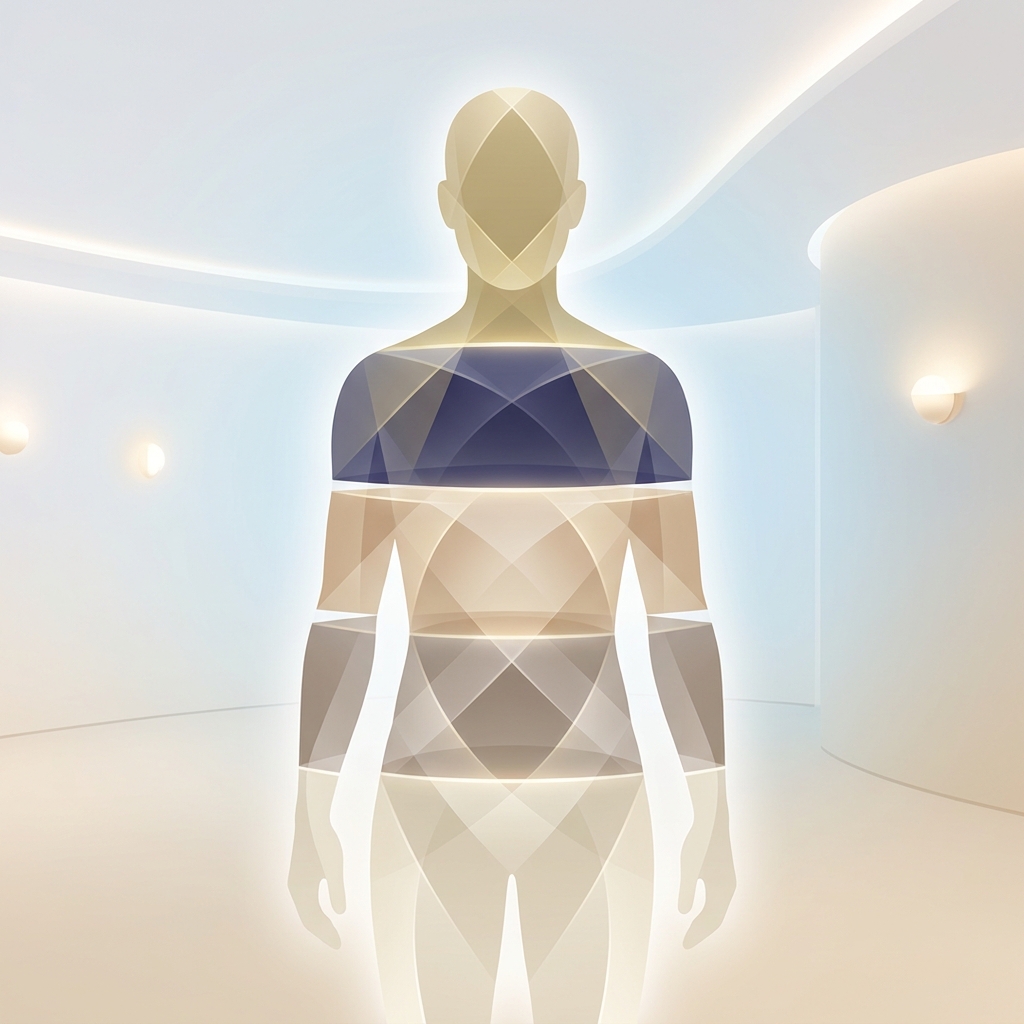
The landscape includes five primary machine types, ranging from consumer smart scales to clinical DEXA. The gap between them is not chiefly about price. It is about data quality and clinical utility. This article maps that hierarchy so readers can understand what kind of data they need and why a supervised, clinical-grade assessment is the only sound foundation for a metabolic program.
Market context makes this timely. Portable and home-use body composition analyzers have seen a 25% sales increase from 2024 to 2026, driven by consumer interest in self-monitoring. Yet accuracy remains a persistent challenge that the market rarely communicates clearly.
Why Body Composition Measurement Matters More Than Ever
In January 2025, the Lancet Diabetes and Endocrinology Commission, comprising 58 global experts and endorsed by more than 75 medical organizations, formally declared that BMI alone is insufficient for diagnosing obesity. It recommended DXA scans or direct body fat measures as the new diagnostic standard.
The Commission introduced a two-tier framework: “clinical obesity” (excess adiposity causing measurable organ dysfunction) versus “preclinical obesity” (excess adiposity without current dysfunction but with future risk). That distinction requires body composition data, not just a scale.
It also explains the MONW phenotype, or metabolically obese, normal-weight individuals. These people have a normal BMI but high visceral fat and low muscle mass. They are invisible to standard screening and detectable only through body composition assessment.
The GLP-1 era raises the stakes further. GLP-1 medications are now the dominant weight-loss intervention in 2026, and a 2026 meta-analysis confirms they cause both fat and lean mass loss. This makes body composition monitoring essential for confirming that patients preserve muscle during treatment. The clinical urgency is real enough that Massachusetts General Hospital launched the BICEP Study (NCT07226947) in 2025 to study impedance monitoring and exercise for preventing muscle loss during incretin therapy.
Sarcopenia, the progressive loss of skeletal muscle mass and function, is now classified as a disease under ICD-10-CM code M62.84 and is a primary concern in geriatrics, oncology, and weight management. Accurate body composition measurement is required to diagnose and monitor it.
The takeaway: body composition measurement is no longer a fitness-enthusiast tool. It is a clinical necessity for metabolic health, disease prevention, and treatment monitoring.
The Five Types of Body Composition Machines: A Clinical Map
The five primary machine types form a hierarchy of accuracy and clinical utility, not a list of equivalent options separated only by cost. For each, the questions worth asking are: what does it measure, where does its accuracy break down, and what clinical decisions can it support? Using the wrong tool for a clinical decision is not a minor inconvenience. It can produce data that actively misleads a treatment program.
BIA (Bioelectrical Impedance Analysis): Consumer Scales and Clinical Units
BIA passes a low-level electrical current through the body and estimates composition based on how tissues resist that current. Fat resists more than muscle and water.
The critical distinction, which most content ignores, is between consumer-grade and clinical-grade BIA. Consumer smart scales use foot-to-foot or hand-to-hand bipolar configurations with a typical error of ±5 to 8%, and up to ±10 to 12% in some lab settings. That makes them unreliable for single-measurement clinical decisions, though useful for tracking directional trends over time.
Clinical-grade BIA, such as the InBody 770, uses an octopolar eight-electrode arrangement for segmental analysis across five body segments: trunk, both arms, and both legs. This significantly outperforms consumer configurations.
Still, BIA accuracy is highly sensitive to hydration, meal timing, and recent exercise, which can shift readings by several percentage points between morning and evening. A 2026 study compared a wearable BIA device, clinical BIA, and DXA in 108 participants; clinical BIA outperformed the wearable, but DXA remained the criterion standard. Research on the mid-range InBody 270 even found “remarkable measurement bias” that “discourages its use for clinical prescription.”
Multi-frequency BIA accounts for 45% of the analyzer market in 2026, and the ACSM’s 2025 guidelines recommend it for athlete monitoring. That does not make consumer BIA appropriate for clinical prescription. Bottom line: consumer BIA tracks trends; clinical BIA can support supervised monitoring; neither matches DEXA for diagnostic precision.
DEXA (Dual-Energy X-ray Absorptiometry): The Clinical Gold Standard
DEXA uses two low-dose X-ray beams at different energy levels to differentiate bone mineral density, lean soft tissue mass, and fat mass in a single scan. It is the only non-invasive method that measures all three compartments at once, with a margin of error of just ±1 to 2% for body fat percentage.
Its key advantage is quantifying visceral adipose tissue (VAT), the metabolically dangerous fat around internal organs linked to cardiovascular disease, type 2 diabetes, and certain cancers. A 2025 study by Oh et al. found DEXA closely matched CT results for fat and lean mass, especially in the arms and legs.
Radiation exposure is roughly 5 µSv per scan, less than one day of natural background radiation, making it safe for repeat use every 3 to 6 months. Scans cost $50 to $300, take 10 to 20 minutes, and require little preparation. The 2025 AACE consensus recommends a baseline DEXA before initiating GLP-1 monitoring to ensure subsequent weight loss is predominantly fat, not muscle. Distinguishing clinical from preclinical obesity, detecting MONW, and diagnosing sarcopenia all require this three-compartment data.
Bod Pod (Air Displacement Plethysmography): Accurate but Limited
The Bod Pod measures body volume by detecting air displaced when a person sits inside a sealed chamber, then calculates density. Its error range is ±1 to 2.7%, comparable to hydrostatic weighing, with assessment completed in about 10 minutes. Its limitation is that it measures only two compartments: fat mass and fat-free mass. It offers no regional distribution, no VAT, and no bone density. The equipment is expensive and rarely available outside research settings. It is a valid research tool, not a substitute for DEXA in clinical metabolic assessment.
Hydrostatic Weighing: The Former Gold Standard
Hydrostatic weighing calculates density by comparing weight on land to weight fully submerged. Once the gold standard, it is accurate when performed correctly but depends on complete lung exhalation, a technically demanding requirement. It is burdensome, slow, and impractical for obese, elderly, and mobility-limited individuals who most need body composition data. Like the Bod Pod, it provides only two-compartment data. Today it is largely a historical reference point.
Skinfold Calipers: Low-Tech, High-Variability
Calipers measure subcutaneous fat thickness at specific sites, then apply a formula to estimate total body fat. Accuracy depends heavily on technician skill, sites measured, and the equation used, with substantial inter-rater variability. They cannot measure visceral fat, bone density, or segmental lean mass. Low cost makes them common in fitness settings, but they are a rough screening tool at best and are not appropriate for clinical prescription or monitoring conditions like sarcopenia.
The Accuracy Hierarchy: What the Numbers Actually Mean
- DEXA: ±1 to 2%
- Bod Pod / hydrostatic: ±1 to 2.7%
- Clinical BIA: ±3 to 5%
- Consumer BIA: ±5 to 12%
- Skinfold calipers: highly variable
Error margins matter clinically. A ±8% error means a person read at 30% body fat could actually fall anywhere from 22% to 38%, a range spanning multiple clinical categories and pointing to entirely different treatment decisions.
There is also a variability problem that competitor content rarely addresses: the same person tested on different machines, or on the same machine at different times of day, can get dramatically different results. A 2026 ScienceDirect study confirms BIA accuracy varies with device type, prediction equations, hydration, obesity, disease, and recent activity. Standardization is not a feature of the device alone. It requires controlled conditions, trained operators, and clinician interpretation. The real question is not “which machine is most accurate?” but “which machine produces data precise enough to guide the specific decision at hand?” For most metabolic decisions, only DEXA clears that bar.
What Consumer Devices Can and Cannot Tell You
Consumer BIA has a legitimate use: tracking directional trends over weeks and months under consistent conditions. If the number moves the right way over time, that is meaningful signal.
What it cannot do is more significant. It cannot reliably distinguish fat loss from muscle loss, cannot measure visceral fat, and cannot detect the MONW phenotype. A person with a BMI of 23 and a scale reading of 22% body fat may still carry dangerous visceral fat and low muscle mass, a distinction only DEXA reliably reveals.
Algorithmic variability compounds the problem. Consumer devices use proprietary prediction equations that vary by manufacturer, age, sex, and ethnicity, so two brands can differ by 5 to 10 percentage points on the same person. A consumer scale cannot determine whether weight lost during GLP-1 therapy is fat or muscle. This is a systems problem, not user error: consumer devices are marketed as health tools without adequate disclosure of their limitations.
Why Clinical Supervision Changes the Equation
A body composition number without clinical context is not actionable data. It is a data point that requires interpretation, comparison to baseline, and integration with a patient’s full metabolic picture.
Supervised assessment adds what the machine cannot: standardized conditions (fasting, hydration, time of day), trained technique, clinician interpretation, longitudinal tracking against a personal baseline, and integration with labs, symptoms, and treatment response. A DEXA report showing 32% body fat, 42 lbs of fat mass, and a VAT area of 150 cm² means little without a clinician who can explain the risk, set targets, and chart a course of action.
The 2025 AACE consensus mandates a baseline scan before initiating GLP-1 monitoring. Without a baseline, later measurements have no reference point. A 2025 PMC editorial notes that beyond BMI, metrics including skeletal muscle, fat mass, and visceral adipose tissue offer deeper insight into disease risk and are essential for longitudinal tracking. The machine is a tool. The clinical program that interprets and acts on the data is the solution.
Body Composition Machines in Clinical Practice: Where Each Type Fits
- DEXA: baseline metabolic assessment, GLP-1 monitoring, sarcopenia diagnosis, VAT quantification, and bone density evaluation. The standard for supervised metabolic programs.
- Clinical BIA (InBody-class): frequent monitoring within a supervised program when DEXA frequency is impractical, provided conditions are standardized.
- Bod Pod: research and athletic settings where two-compartment data suffices.
- Hydrostatic weighing: largely historical; occasional research use.
- Skinfold calipers: rough fitness screening only.
- Consumer BIA scales: personal trend-tracking under consistent conditions; not for clinical decisions.
The appropriate tool depends on the clinical question. Most meaningful metabolic questions require DEXA-grade data.
The Data Quality Standard for a Metabolic Program
The difference between a $30 smart scale and a clinical DEXA assessment is not price. It is whether the data is precise enough to guide a clinical decision. Clinical utility means data that can distinguish fat loss from muscle loss, detect visceral fat, identify sarcopenia, and confirm treatment response.
As GLP-1 medications become the dominant weight-loss intervention, the stakes rise. At ADA 2026, experts highlighted how these medications are reshaping obesity treatment, with emerging data on lean body mass preservation underscoring the importance of body composition monitoring. Both sarcopenia and visceral obesity are independently associated with increased morbidity and mortality, so early detection may help prevent adverse outcomes.
A program built on consumer BIA is built on a ±8% margin of error, too imprecise to confirm whether muscle is preserved or visceral fat is declining. The standard for a medically supervised program is DEXA-grade data interpreted by a clinician and tracked longitudinally against a personal baseline.
Conclusion: The Right Machine Is the One That Answers the Clinical Question
The question was never “which machine should I buy?” It was always “what kind of data is needed to make a decision about metabolic health?”
The hierarchy is clear: consumer BIA tracks trends; clinical BIA monitors within a supervised program; DEXA provides the three-compartment, VAT-inclusive, bone-density data that clinical decisions require. The Lancet’s 2025 shift away from BMI means understanding this hierarchy matters for anyone managing metabolic health, not just athletes or researchers.
The machine is a tool. The clinical program that standardizes conditions, interprets results, and acts on the data is what turns a number into a health outcome. For anyone considering a body composition program, particularly in the context of GLP-1 therapy, perimenopause, age-related metabolic change, or sarcopenia risk, the appropriate starting point is a clinical-grade baseline assessment, not a consumer device.
What a Clinical Body Composition Assessment Looks Like at Red Mountain
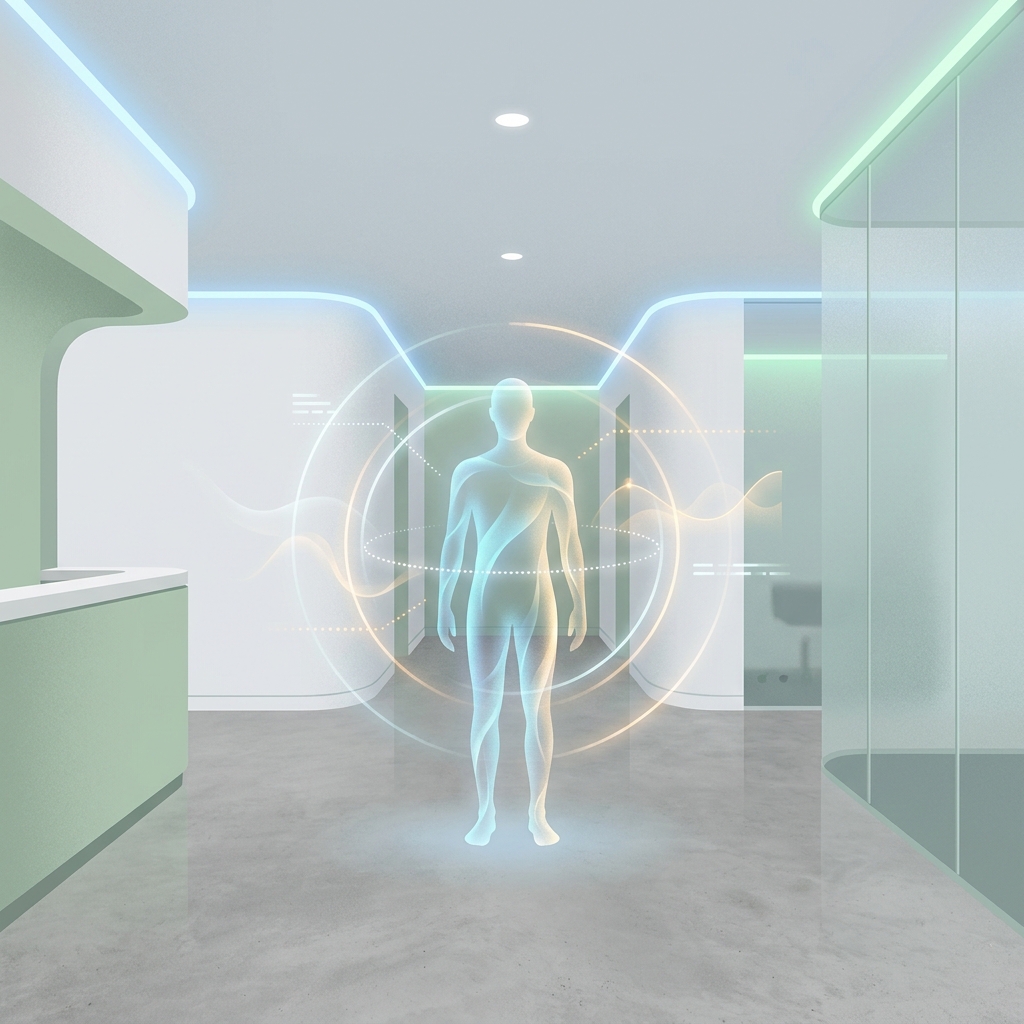
At Red Mountain, body composition assessment is a foundation for the metabolic program, not an add-on. Data is interpreted by clinical staff in the context of a patient’s full picture: labs, symptoms, treatment response, and goals. It is never delivered as a raw number.
This connects directly to Red Mountain’s four-stage care architecture. Body composition assessment supports the Foundation stage by establishing a metabolic baseline, the Function stage by monitoring muscle preservation and hormonal response, and the Longevity stage by protecting results over time. For patients using a GLP-1 medication, body composition tracking is part of Red Mountain’s clinical approach to helping ensure weight loss is predominantly fat and that muscle mass is preserved, consistent with the 2025 AACE consensus.
For those seeking clarity about their actual body composition rather than weight or BMI alone, a clinical consultation is the appropriate next step. This is the kind of conversation Red Mountain’s providers have with patients every day.