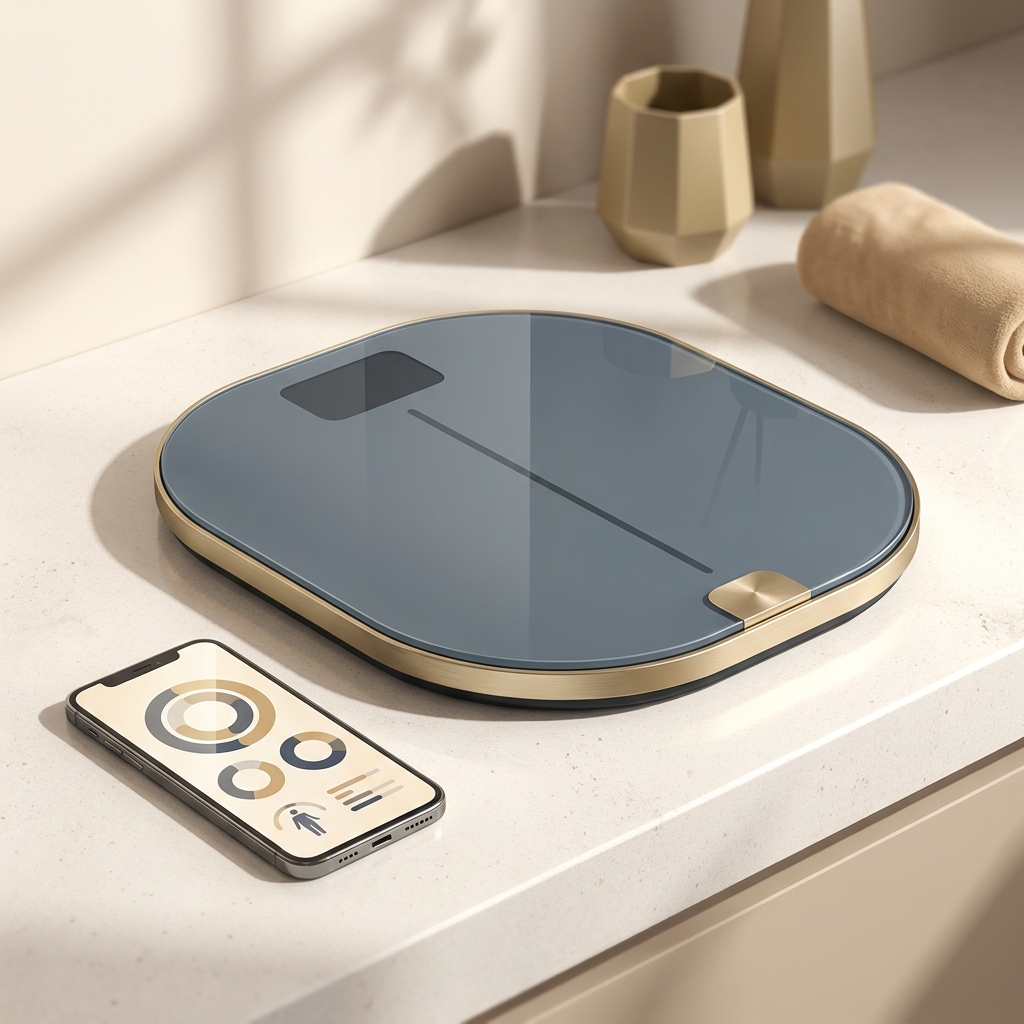
A person steps onto a smart scale on Monday morning and sees a body fat percentage of 27%. Two days later, under seemingly identical conditions, the same device reads 30%. Nothing meaningful has changed about their body in 48 hours. So what happened? Did they gain fat, or is the device simply noisy?
This is the central tension worth understanding. Smart body composition analyzers are genuinely useful tools, but the word “smart” quietly sets an expectation the technology cannot always meet. It suggests precision, insight, and something close to a clinical verdict. What these devices actually deliver is more nuanced, and knowing the difference changes how a person should use the data.
This article delivers a two-part framework. First, a plain-language explanation of what Bioelectrical Impedance Analysis (BIA) based “smart” features do well and where they hit hard limits. Second, a structured decision guide for when a consumer device is sufficient and when clinical measurement becomes necessary. This is not a product review. It is a clinical interpretation guide, built through the lens of Red Mountain’s more than 30 years of real-world patient outcomes.
The relevance is growing. The global smart scale market reached roughly $1.8 billion in 2025 and continues to expand, which means more patients now arrive at metabolic health consultations carrying months of app-generated body composition data. That data is valuable. Interpreting it correctly is the harder part.
How Smart Body Composition Analyzers Actually Work
Bioelectrical Impedance Analysis is simpler than it sounds. A low-level electrical current passes through the body, and different tissues resist that current differently. Muscle and water conduct well; fat and bone resist more. By measuring that resistance, the device estimates how much of the body is made up of each component.
The key word is estimates. A BIA device does not measure fat directly. It measures electrical resistance and then applies population-derived algorithms to infer fat mass, muscle mass, and other metrics. This distinction matters throughout everything that follows.
Most smart analyzers report a familiar set of numbers: body fat percentage, skeletal muscle mass, body water percentage, bone mass, BMI, a visceral fat index, and basal metabolic rate (BMR). More advanced models add segmental analysis (measuring each limb separately), standing heart rate, ECG readings, and nerve-health scores. These features were once confined to clinical-grade equipment.
The “smart” layer sits on top of the measurement itself: app connectivity, cloud storage of long-term data, integration with platforms like Apple Health and Google Fit, and algorithmic trend analysis. These are what separate a smart analyzer from a basic bathroom scale.
One hardware detail deserves early mention. Some devices use four electrodes (foot to foot), while others use eight (adding hand contact). That difference changes how the body is measured, with real implications for accuracy explored further below.
What the ‘Smart’ Features Genuinely Add
The core value of a smart analyzer is not pinpoint accuracy on any single reading. It is longitudinal trend detection at a frequency no other affordable method can match.
Consider the alternative. A DEXA scan, the clinical gold standard, costs between $100 and $300 per session. Few people scan monthly, let alone daily. A smart scale fills the gap between those infrequent assessments with a steady stream of data points.
That daily frequency unlocks a genuinely meaningful insight: body recomposition. When a person loses fat and gains muscle simultaneously, a traditional weight scale shows nothing because the numbers cancel out. Body composition tracking makes that change visible over weeks.
Behavioral accountability is the other real benefit. Roughly 74% of smart scale users sync their devices with smartphone health apps capable of storing more than 365 days of biometric records. Watching a trend line move in the right direction, even slowly, is a documented motivational mechanism that supports adherence to nutrition and exercise programs. For practical strategies on how to stay motivated through the slower phases of body recomposition, consistent data feedback is one of the most underrated tools available.
Ecosystem integration adds further value. Syncing with Apple Health, Google Fit, Garmin Connect, and MyFitnessPal lets body composition data sit alongside sleep, activity, and nutrition metrics, creating a fuller metabolic picture. One caveat: advanced metrics like the visceral fat index may not transfer cleanly to every platform without manual configuration, so users should verify what their specific device and app actually share.
Where Smart Analyzers Hit Their Limits
Honesty about accuracy is essential. Consumer smart scales carry a typical body fat error of ±3 to 5 percentage points versus DEXA under real-world conditions. Laboratory estimates widen that range to ±10 to 12%, and a 2021 observational study found inaccuracies averaging 5 to 10 pounds for fat mass and fat-free mass estimates.
The sources of that noise are predictable: hydration status, whether a person has eaten, skin temperature, recent physical activity, and body position all independently alter impedance readings. A single data point is therefore inherently unreliable. A 2024 study demonstrated that just five hours of passive dehydration measurably decreased BIA-derived fat mass estimates with no actual change in body fat at all.
Contrast that with DEXA, which has a precision error of roughly 1.5 to 1.8% and can detect changes as small as 0.1 pound. No consumer BIA device approaches that sensitivity.
Electrode architecture matters more than brand or price. Eight-electrode segmental models measure each body segment directly. Four-electrode foot-to-foot models extrapolate upper-body composition from lower-body readings, introducing additional error.
Accuracy also varies by population. A 2025 systematic review found that BIA consistently underestimates body fat percentage and fat mass, particularly in overweight and obese populations, which is precisely the group most likely to be monitoring their health with these devices.
Finally, contraindications. BIA is not recommended for individuals with implanted cardiac devices such as pacemakers or ICDs, and manufacturers advise against use during active pregnancy. These users should rely on weight-only mode or book a clinical assessment instead.
The Visceral Fat Problem: Index vs. Measurement
Here is the distinction most consumer content skips entirely: a smart scale’s “visceral fat score” is an estimated index derived from algorithms. It is not a measurement of visceral adipose tissue (VAT).
This matters clinically because visceral fat, the fat surrounding internal organs, is directly associated with cardiovascular disease, insulin resistance, and metabolic syndrome. Accurate quantification of it is a meaningful data point.
The reality is straightforward. Only imaging methods (DEXA, MRI, and CT) can directly measure visceral adipose tissue. No BIA device, regardless of price or electrode count, can do this. The visceral fat index is a relative score built from waist-region impedance and population algorithms, designed to correlate with risk categories rather than quantify actual tissue volume.
That does not make the index useless. A rising visceral fat index over time is a signal worth taking seriously, even when the absolute number is not diagnostically precise. A 2025 editorial in Frontiers in Medicine established that body composition assessment, including visceral fat tissue measurement, is a fundamental element of chronic disease prevention, diagnosis, and management in clinical practice.
The practical takeaway: treat a high or rising visceral fat index as a prompt to seek clinical assessment, not as a diagnosis in itself.
Getting the Most Accurate Readings From Your Device
Since trend detection is the device’s real strength, consistency of measurement conditions is what improves the signal-to-noise ratio.
The standard protocol is simple: measure first thing in the morning, fasted, after using the restroom, before exercise, and under the same conditions each day. Consistency matters far more than any single reading. A measurement taken under identical conditions every morning is more informative than sporadic checks throughout the day.
Two device features can help. Athlete mode adjusts for the lower body water percentages typical of highly trained individuals (generally 10 or more hours of exercise per week with a resting heart rate below 60 bpm), reducing error for that group. Multi-frequency BIA (MF-BIA) models improve on single-frequency devices by differentiating intracellular and extracellular water, yielding more consistent estimates across body types.
One more consideration: biometric data synced to cloud platforms is sensitive health information. Users should review their device’s data-sharing settings and understand what their app ecosystem does with long-term records.
The Clinical Decision Framework: When a Smart Scale Is Enough and When It Isn’t
This is the practical decision guide the article has been building toward.
When a Consumer Smart Analyzer Is Sufficient
- General wellness and trend awareness. For adults without active metabolic conditions, a smart analyzer provides meaningful, actionable trend data.
- Behavioral accountability. Daily feedback supports adherence, a use case where consistency matters more than absolute accuracy.
- Body recomposition monitoring. It is the only affordable daily tool that can detect simultaneous fat loss and muscle gain.
- Supplement to periodic clinical assessment. Used alongside annual or semi-annual DEXA scans, it fills the data gap between appointments.
- Motivation and engagement. Watching a trend line improve over months is a genuine motivational tool.
For this use case, prioritize 8-electrode segmental models over 4-electrode designs and establish a consistent morning protocol.
When Clinical Measurement Becomes Necessary
- Clinical diagnosis and risk stratification. Diagnosing sarcopenia, assessing obesity severity, or stratifying metabolic risk requires DEXA or clinical-grade BIA. The 2024 EASO framework explicitly recommends DEXA or BIA when BMI and physical examination are ambiguous.
- Medically supervised weight loss. Patients undergoing supervised weight loss need accurate muscle-preservation data that consumer BIA cannot reliably provide. Clinical assessment protects against mistaking muscle loss for fat loss.
- Sarcopenia assessment. A 2024 trial of 239 participants found BIA effective for diagnosing sarcopenia at clinical grade, but consumer devices lack that precision.
- Very low or very high body fat. BIA accuracy degrades at the extremes; a 2022 study found larger errors at these levels.
- Visceral fat quantification for clinical decisions. Only imaging can validly measure VAT.
- Contraindications. Pacemaker and ICD users, and those in active pregnancy, should not use BIA at all.
The hybrid approach, periodic DEXA paired with daily smart scale monitoring, maximizes both frequency and accuracy.
What 30 Years of Clinical Experience Adds to the Picture
Smart scale data has become a common starting point for patients arriving at metabolic health consultations. Interpreting it correctly requires context the device cannot supply.
A clinician does what the app cannot: place trends against labs, hormonal status, medication history, sleep, stress, and age-related metabolic change, all of which shift body composition independently of diet and exercise. The connection between sleep and weight loss is one example of a variable that meaningfully affects body composition readings yet is invisible to the scale itself.
This is especially relevant for perimenopausal and menopausal women. Hormonal shifts alter body water distribution, fat distribution, and muscle mass in ways that make BIA readings genuinely difficult to interpret without clinical context. Understanding how to sail through menopause with the right clinical support can make a significant difference in how body composition data is understood and acted upon during this transition.
Red Mountain’s more than 30 years of real-world patient outcomes provide a reference framework for interpreting body composition trends that no algorithm built into a consumer device can replicate. The relationship is complementary, not competitive: the device generates the trend, and the clinician interprets what it means for that specific patient.
Body composition assessment is increasingly recognized as superior to BMI alone for chronic disease risk stratification. A 2025 paper in the Journal of Obesity and Metabolic Syndrome established that skeletal muscle, fat mass, and visceral adipose tissue offer deeper insights into nutrition and disease risk than BMI. Red Mountain exists to bridge the gap between consumer data and clinical meaning.
Conclusion: Smart Data, Smarter Interpretation
The framework holds in two parts. Smart body composition analyzers genuinely add longitudinal trend detection, behavioral accountability, and daily feedback. They cannot deliver direct visceral fat measurement, DEXA-level diagnostic precision, or clinical diagnosis.
The single most important takeaway is the visceral fat distinction. A visceral fat index is a trend signal, not a tissue measurement, and treating it as the latter is the most common and consequential misreading of smart scale data.
The decision framework is straightforward. For general wellness trend tracking and behavioral accountability, a consumer smart analyzer is a valuable tool. For clinical diagnosis, sarcopenia assessment, or medically supervised weight loss, periodic clinical measurement is necessary.
The broader principle: the goal of body composition tracking is not a number. It is a trend that informs decisions. The device generates the data; clinical expertise determines what it means for long-term metabolic health. Patients who arrive at consultations with months of data are better prepared for a productive conversation, and that data becomes most valuable when interpreted by someone with the experience to contextualize it.
Ready to Understand What Your Body Composition Data Is Actually Telling You?
Smart scale data raises questions a device cannot answer. What does a rising visceral fat index mean for a particular person’s metabolic health? Is the muscle mass trend consistent with their age and hormonal status? Is the fat loss visible in the data real, or a hydration artifact?
For those who have been tracking body composition and want to understand what the trends mean for long-term metabolic health, a consultation with Red Mountain’s clinical team is typically where that conversation starts. Thirty years of patient outcomes inform how the data is interpreted and what is recommended next.