
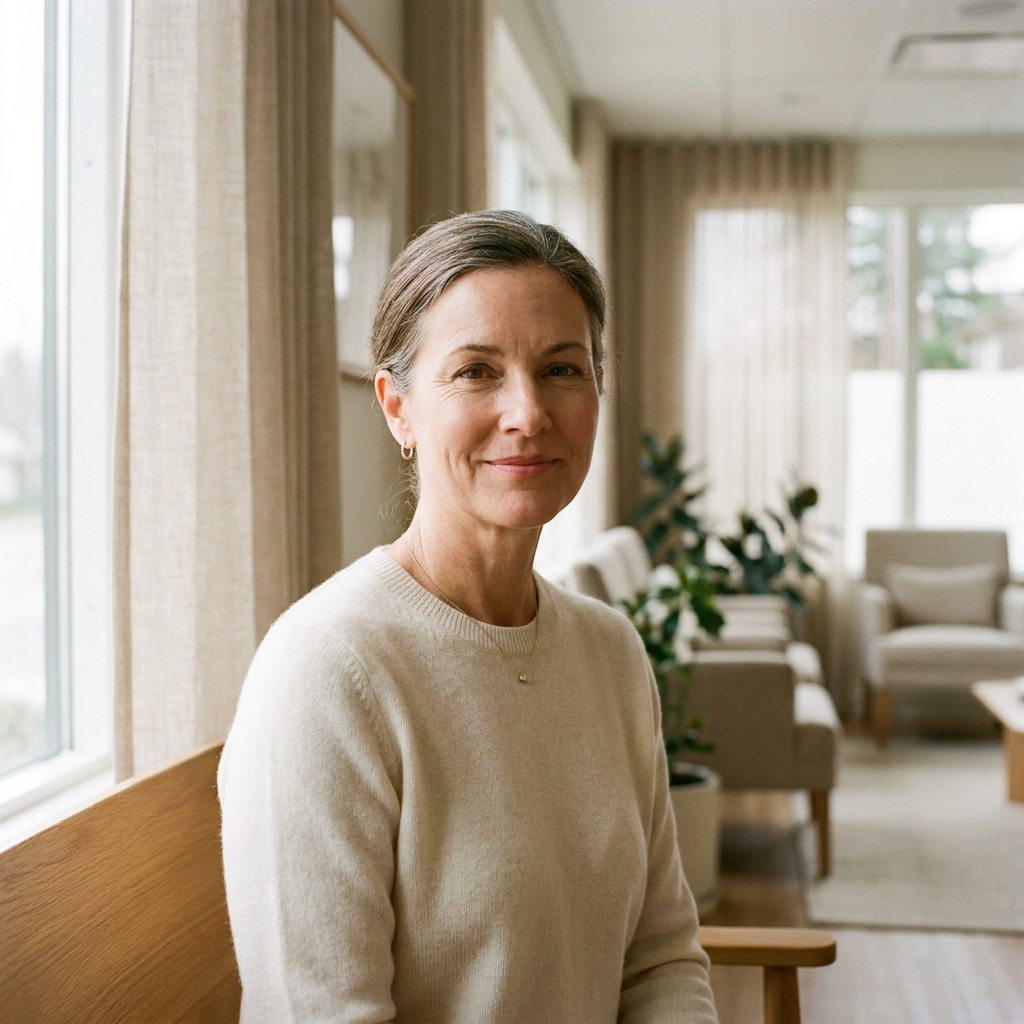
Millions of people want to look better as they age. Almost as many are quietly afraid of looking like they tried. That is the paradox at the center of nearly every search for Botox: the very outcome most people fear (the tight, frozen, unmistakably “done” face) is the thing they most want to avoid.
This hesitation is not vanity. It is about identity. The goal is not to become someone new. It is to look like the same person, only rested. That is a legitimate and entirely achievable aim.
The cultural moment supports it. Neuromodulator injections reached nearly 9.9 million U.S. treatments in 2024, according to the American Society of Plastic Surgeons, making them the most popular minimally invasive procedure by volume. Yet the conversation around them has shifted decisively. The frozen look is out. Natural, refreshed results are the standard.
This article is not written to sell Botox. It is written to explain what natural results actually look like, why they are achievable, and how they fit into a broader philosophy of aging well. At Red Mountain, that philosophy is simple: the goal is to look like yourself, the most rested and energized version, not a different person.
Why ‘Natural Looking’ Has Become the Standard, Not the Exception
The overfilled, frozen aesthetic is now widely recognized as outdated. Double board-certified facial plastic surgeons describe the defining 2026 trend as “less product, better placement,” meaning injectables used strategically to soften and balance rather than to erase movement.
The data confirms how mainstream this has become. In 2024, minimally invasive procedures made up more than 90% of all reported aesthetic procedures, with neuromodulators and hyaluronic acid fillers together accounting for 53.9% of that volume. Subtle correction is no longer fringe. It is the majority.
Consumer behavior tracks the same way. Industry data from 2025 shows a 28% increase in spending on aesthetic “tweakments” over two years, with clients consistently preferring subtle enhancements over dramatic change.
Why the shift? Social media made overdone results visible and easy to recognize. Patients grew more educated, more discerning, and more demanding of subtlety. “Natural looking” is not a compromise. It is the current gold standard of skilled aesthetic medicine.
The Deeper Question: What Does It Mean to Age Well?
Beneath the technique lies a more human question: is it possible to care for one’s appearance without betraying some ideal of authenticity?
Aging well is not about stopping time or erasing the evidence of a life lived. It is about aligning how a person looks with how they feel. For many people in their 40s, 50s, and 60s, those two things have drifted apart. The face at rest begins to read as tired, stern, or unhappy, even when the person inside feels none of those things.
The social stigma around injectables persists, but it is almost entirely attached to visible, overdone results, not to subtle, undetectable ones. This is the key insight: when Botox is done well, it removes itself from the conversation. Friends say “you look great,” not “you had something done.”
Understood this way, conservative aesthetics are less an act of vanity than an expression of self-respect. That is the heart of Red Mountain’s Confidence philosophy: looking well, not looking done.
Who Is Actually Seeking Natural Botox, and Why It Matters
Much of the industry conversation centers on preventive Botox for patients in their 20s and 30s. Roughly 24% of Botox patients are now aged 19 to 34. But the 40s to 60s demographic seeking subtle correction is large, underserved, and often overlooked.
This patient has watched her face change over the past decade. Her resting expression no longer reflects how she feels inside. She wants a correction, not a transformation. Baby Boomers, too, are signaling strong demand for refined, natural results and a refreshed look, according to ASPS statistics.
Her concerns are specific: looking overdone, being judged, losing her identity, or committing to something she cannot undo. These concerns are reasonable. And the answer to all of them is the same: conservative dosing, skilled placement, and a provider whose aesthetic philosophy matches her own.
What Makes Botox Look Natural, and What Makes It Look Overdone
Unnatural results are almost never caused by the product itself. They come from poor technique, excessive dosing, or incorrect placement by an inexperienced injector.
The core principle is partial muscle modulation rather than full relaxation. Natural results preserve movement and expression while softening the lines that form at rest. Dosing matters here. A standard treatment uses roughly 35 units. Conservative approaches use significantly fewer, distributed across more injection points for a softer, more diffuse effect.
Placement philosophy matters just as much. The goal is to work with facial anatomy, not against it, respecting the balance of muscle groups so that one area does not overcompensate for another. Restraint is also a long-term investment: conservative, consistent treatment often requires less product over time, making it sound both aesthetically and economically.
Understanding the Techniques Behind Natural Results
“Baby Botox,” “Microtox,” and “Skintox” are distinct approaches, not interchangeable terms.
- Baby Botox (also called micro-Botox or soft Botox) uses roughly 30 to 50% fewer units than standard dosing, spread across more injection points to achieve partial muscle modulation. It suits patients who want expression preserved while softening dynamic lines.
- Microtox (intradermal Botox) is injected into the superficial dermis rather than the muscle, targeting skin quality such as pore size, fine surface texture, and subtle tightening rather than movement. In vitro research has shown that botulinum toxin can upregulate type I collagen and decrease matrix metalloproteinase production in human dermal fibroblasts.
A 2025 peer-reviewed systematic review in the journal Muscles found that early botulinum toxin application may reduce muscle hyperactivity, delay dynamic wrinkle formation, and minimize static line development, with histological evidence suggesting potential dermal collagen remodeling.
Technique selection should be driven by individual anatomy, skin quality, and goals, not by trend. This is a clinical decision, not a menu choice. Newer formulations such as Daxxify and Letybo continue to expand the landscape of options for personalized, natural outcomes.
The Long-Game Philosophy: Natural Botox as Part of Aging Well
It helps to reframe Botox from a reactive fix to a proactive strategy, much the way sunscreen is now understood as prevention rather than treatment.
A 15-year computational modeling study published in Aesthetic Plastic Surgery examined long-term wrinkle depth across different treatment frequencies, with early, consistent initiators showing the largest reductions over time. The biological context is straightforward: collagen decreases by roughly 1% per year after age 20, which provides a rationale for conservative, early intervention.
The most common anxiety deserves a direct answer. Stopping Botox does not cause a rebound effect or accelerate aging. Muscles simply return to baseline, and patients who have used it consistently often find their lines are softer than before they began.
Natural Botox is one tool within a broader ecosystem, not a standalone fix. This is where Red Mountain’s Confidence pillar connects to something larger: aligning outward appearance with the internal work of metabolic health, hormone balance, and sustained well-being.
Choosing the Right Provider: Why the Injector Matters More Than the Product
Patients treated by highly skilled injectors are three times more likely to report satisfaction with their results, according to the Aesthetic Surgery Journal.
Look beyond credentials. A provider’s aesthetic philosophy matters as much as clinical skill. Ask to see their work. Ask how they approach conservative dosing. Ask what their goal is for the patient’s face.
Red flags: recommending maximum units at a first visit, failing to ask about goals or concerns, or a portfolio that shows one uniform “look” across every patient.
Green flags: a provider who listens more than they talk, who starts conservatively and adjusts, who can explain why product is placed where it is, and whose patients look like themselves, only better.
In-person assessment by an experienced provider is essential. Anatomy varies significantly between individuals, and the relationship is longitudinal: natural results are refined over time, not reset at every visit.
Natural Botox Within a Broader Approach to Aging Well
For patients in their 40s, 50s, and 60s, the face is one part of a larger picture. Hormonal changes, metabolic shifts, sleep quality, and skin health all affect how a person looks and feels.
The most natural-looking results appear when the patient is also attending to overall health. A face that looks rested and vital is supported by a body that functions well. Skin-quality treatments such as medical-grade skincare, laser, and RF microneedling play a complementary role, addressing texture, tone, and collagen support in ways injectables alone do not.
This is precisely how Red Mountain’s care architecture is designed. The Confidence pillar (aesthetic alignment) follows and supports the Foundation stage (metabolic health) and the Function stage (hormonal restoration). Looking well is the outward expression of feeling well. No single treatment is the answer.
Common Questions and Honest Answers
Will anyone be able to tell?
If done well, no. The goal is that people notice the patient looks well, not that they notice a procedure. Natural results are defined by the absence of the “done” look, which is a technique and dosing failure, not an inherent property of the treatment.
Am I too old to start, or too young?
There is no universal right age. The relevant question is whether dynamic lines are forming that are bothersome, and whether conservative treatment aligns with the patient’s goals. For patients in their 40s to 60s, the focus shifts from prevention to subtle correction: softening lines that have already formed while preserving movement. A skilled provider assesses anatomy and goals, then recommends a starting point rather than a standard protocol.
What if I want to stop?
Botox is not permanent. Results last roughly 3 to 4 months with standard formulations, while newer options like Daxxify can extend that to 6 to 9 months. Stopping causes no rebound and does not accelerate aging. Muscles gradually return to baseline, and consistent, conservative users often find their skin in better condition than it would otherwise have been. This is a reversible, adjustable tool, not a lifelong commitment to a particular look.
How do I know if a provider is right for me?
Look for a provider who prioritizes the patient’s goals over their protocol, who starts conservatively, and whose philosophy centers on looking like oneself. A provider who can articulate why restraint produces better long-term outcomes is worth trusting. In-person consultation is essential.
Conclusion: Aging Well Is a Philosophy, Not a Procedure
The tension at the start of this article was real: the desire to age authentically and confidently, without the social cost of looking worked on.
The resolution is clear. Natural-looking Botox, done conservatively by a skilled provider, does not betray authenticity. It supports it, by ensuring the face in the mirror reflects how the person inside actually feels.
This is not about chasing youth. It is about maintaining alignment between how a person looks and how they feel, as part of a broader commitment to aging well. For many, the aesthetic question is only one piece of a larger picture, and the most lasting results come from attending to the whole. The goal, always, is to look like yourself, only rested. That is a standard worth holding to.
If This Resonates, a Conversation Is a Good Next Step
If what you have read here sounds like the approach you have been looking for, a consultation is usually the most useful next step: not a commitment, but a conversation.
A Red Mountain aesthetic consultation involves an in-person assessment, a discussion of goals and concerns, and a conservative recommendation tailored to individual anatomy. The Confidence pillar is designed for patients who want to look well, not done, and who understand that the best results are subtle enough that no one can name them.
There is no rush. Red Mountain is here when you are ready, and takes the time to get it right.