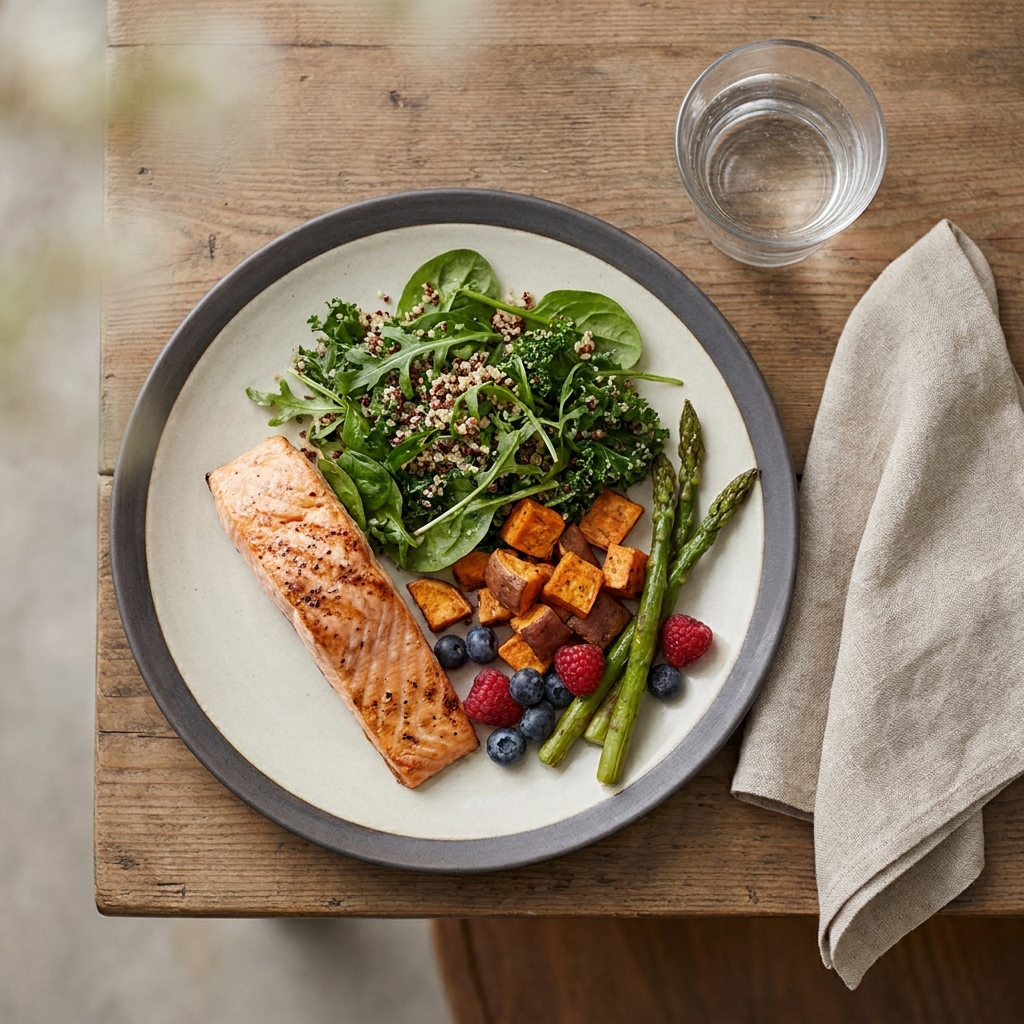
Most advice on high-protein eating falls into one of two formats: a list of protein-rich foods or a bare grams-per-kilogram calculator. Neither explains how to use the information. A useful protein strategy rests on three levers: how much (goal-based intake), when (distribution across meals), and why (the physiology that makes it work).
Protein is a powerful tool, but it is one tool within a larger metabolic picture. This article covers all three levers, addresses the common kidney concern, and looks at protein needs for people taking GLP-1 medications. It also explains why some people reach a point where food strategy alone is not enough.
How Much Protein Do You Actually Need?
The right amount depends on the goal. A single generic number rarely serves people who are actively losing weight.
The RDA Is a Floor, Not a Target
The official Recommended Dietary Allowance for adults is 0.8 grams per kilogram of body weight per day. That figure is the minimum needed to avoid deficiency, not the intake best suited to fat loss or muscle preservation. Because it is the most widely published number, many people treat it as a goal and end up eating too little protein during a diet.
Goal-Based Intake Ranges for Active Fat Loss
Research reviews generally converge on these ranges:
- 1.2–1.6 g/kg/day for active fat loss
- 1.6–2.2 g/kg/day for those also trying to preserve or build muscle during a deficit, with around 2.0 g/kg suited to very active individuals or those in a steep deficit
Where someone falls within these ranges depends on activity level, deficit size, and whether they do resistance training. A larger deficit and regular strength work both point toward the higher end. In practice, higher intake protects lean mass while the body is in a calorie deficit.
Why Overweight or Insulin-Resistant Individuals May Need Relatively More Protein
The protein leverage hypothesis, published in Philosophical Transactions of the Royal Society B, proposes that modern processed foods dilute protein with fat and carbohydrate. Because appetite pushes the body to reach its protein requirement, people eat more total calories along the way.
Insulin resistance adds a second layer. It disinhibits muscle protein breakdown and hepatic gluconeogenesis, so the body uses protein less efficiently. Insulin-resistant individuals therefore often need more protein, not less, to meet the same physiological requirement. One-size-fits-all targets can under-serve the people who need tailored guidance most.
When: Why Timing and Distribution Matter as Much as the Daily Total
Most guidance treats protein as a single daily number. Distribution across the day matters just as much.
The 25–30 Gram Threshold for Muscle Protein Synthesis
Spreading total intake across at least three eating occasions of 25–30 g each helps each meal trigger muscle protein synthesis. On average, about 30 g of protein in one meal supplies enough leucine to stimulate muscle building.
A common pattern of a light breakfast, a modest lunch, and a protein-heavy dinner works against this. Two meals fall below the threshold, so much of the day’s muscle-protective potential goes unused.
Putting Distribution Into Practice
A simple planning approach:
- Set the daily target using the goal-based ranges above.
- Divide it across 3–4 meals or snacks, aiming for roughly 25–30 g at each.
- Avoid front- or back-loading, especially at breakfast.
- Consider the source. Different proteins, such as whey and casein, affect satiety and appetite hormones differently.
Why It Works: The Mechanisms Behind High-Protein Weight Loss
This section explains the physiology often missing from popular guidance on high-protein diets: why these numbers actually work.
The Thermic Effect of Food (TEF)
Protein takes more energy to digest than other macronutrients. About 20–30% of protein calories are burned during digestion, compared with 5–10% for carbohydrates and 0–3% for fats. Replacing some carbohydrate or fat calories with protein modestly raises daily energy expenditure without any extra activity.
Satiety Hormones: Beyond Willpower
Protein’s effect on appetite works through gut hormones, not just discipline. Higher protein intake increases the body’s own satiety hormones, including GIP and endogenous GLP-1, and reduces ghrelin, the primary hunger hormone. Protein-driven changes in gluconeogenesis also support steadier glucose levels and fewer hunger swings.
A landmark trial in the American Journal of Clinical Nutrition found that a high-protein, ad libitum diet reduced spontaneous energy intake by roughly 441 kcal per day and produced meaningful fat loss. This held even as the body mounted a compensatory response, with lower leptin and higher ghrelin. The protein effect persisted despite the body’s own resistance.
Muscle Preservation and Metabolic Rate
Adequate protein during a deficit helps prevent loss of fat-free mass, which helps maintain resting energy expenditure. Muscle loss during dieting is a major driver of the metabolic slowdown behind plateaus and regain.
Real-world data from the National Weight Control Registry shows that people eating a higher-protein, energy-restricted diet retain more fat-free mass, including skeletal muscle, and lose more fat than those eating less protein. This holds across all adult age groups. Pairing high protein with resistance training preserves fat-free mass better than diet alone.
What the Evidence Shows: High-Protein Diets vs. Standard Calorie Restriction
A 2026 retrospective study in Nutrition & Metabolism compared a high-protein diet with standard calorie restriction over 24 weeks. Both improved weight and body composition, but the high-protein approach performed better, reducing central obesity and body fat percentage and improving glycemic control and adipocytokine profiles.
A separate 2026 study found that high-protein diets increased the probability of obesity remission by 6% and could raise weight-loss success rates by as much as 50%, largely by protecting against muscle loss. These are study-level findings, not predictions of individual results.
Addressing the Kidney Myth
One of the most common objections to high-protein eating is the fear of kidney damage. Researchers at McMaster University examined more than two dozen studies involving hundreds of participants. Lead researcher Stuart Phillips concluded: “Protein causing kidney damage just lacks any support. I think we can put this concept to rest.”
A 2026 meta-analysis of 22 randomized controlled trials in healthy adults found that high-protein diets actually increased eGFR compared with lower-protein diets, with no consistent biochemical evidence of kidney injury. This applies to healthy adults; anyone with existing kidney disease should follow individualized medical guidance.
Protein Needs for the Growing GLP-1 Medication Population
Between 2019 and 2023, use of GLP-1 medications for weight loss in the United States rose from about 21,000 to 174,000 users, an increase of more than 700%. Protein strategy for this group is now a mainstream concern.
GLP-1 medications reduce appetite, and a recognized effect of therapy is some loss of lean tissue. Lower appetite can make protein targets harder to reach. A 2025 joint advisory involving the American Society for Nutrition recommends roughly 80–120 g of protein per day for most adults in active weight loss, nearly twice standard recommendations.
Analyses of major GLP-1 trials and newer research presented at ECO2026 point the same way. Without a deliberate plan, a meaningful share of weight lost can come from lean mass. With adequate protein and resistance training, much more of the loss comes from fat and muscle is better preserved. In this setting, the medication is a tool, and a structured plan is what protects muscle.
When Food Strategy Alone Isn’t Enough
Certain signals suggest a DIY approach has reached its limit:
- A plateau that persists despite consistent intake
- Visible or measured muscle loss despite adequate protein
- Ongoing hunger or hormonal resistance that does not respond to dietary changes
- Taking a GLP-1 medication without a structured muscle-preservation plan
These patterns often reflect underlying factors such as insulin resistance, perimenopause or menopause, or age-related change, which diet alone cannot correct. At that point, individualized assessment through labs, body composition tracking, and a structured plan is more useful than another adjustment to a macro calculator.
How a Supervised Program Builds on These Same Principles
A clinically led program uses the same three levers, applied to the individual. Protein and macro targets come from labs and body composition rather than a generic formula. For patients on weight-loss medications, structured support can help preserve muscle, manage side effects, and maintain nutrient balance.
Red Mountain has applied this approach for more than 30 years in its brick-and-mortar clinics. Medication and food strategy are treated as tools, while structure, monitoring, and clinical guidance over time are what sustain results.
Conclusion
An effective protein strategy comes down to three levers: how much (goal-based ranges above the RDA floor), when (about 25–30 g per meal across the day), and why (thermic effect, satiety hormones, protein leverage, and muscle preservation). Protein is a well-supported lever, but it works best as part of a broader metabolic plan rather than as a standalone fix. Persistent plateaus, muscle loss, or hormonal resistance are signs that individualized clinical insight is likely to help more than further DIY adjustment. Sustainable metabolic health is built over time.
Is It Time to Move Beyond DIY Protein Tracking?
If plateaus, muscle loss, or hormonal resistance sound familiar, a consult is usually the next step. At Red Mountain, the consult is educational and diagnostic: labs, body composition analysis, and personalized targets that explain what is happening and why. It draws on decades of clinical experience helping patients preserve muscle and keep their results over the long term.