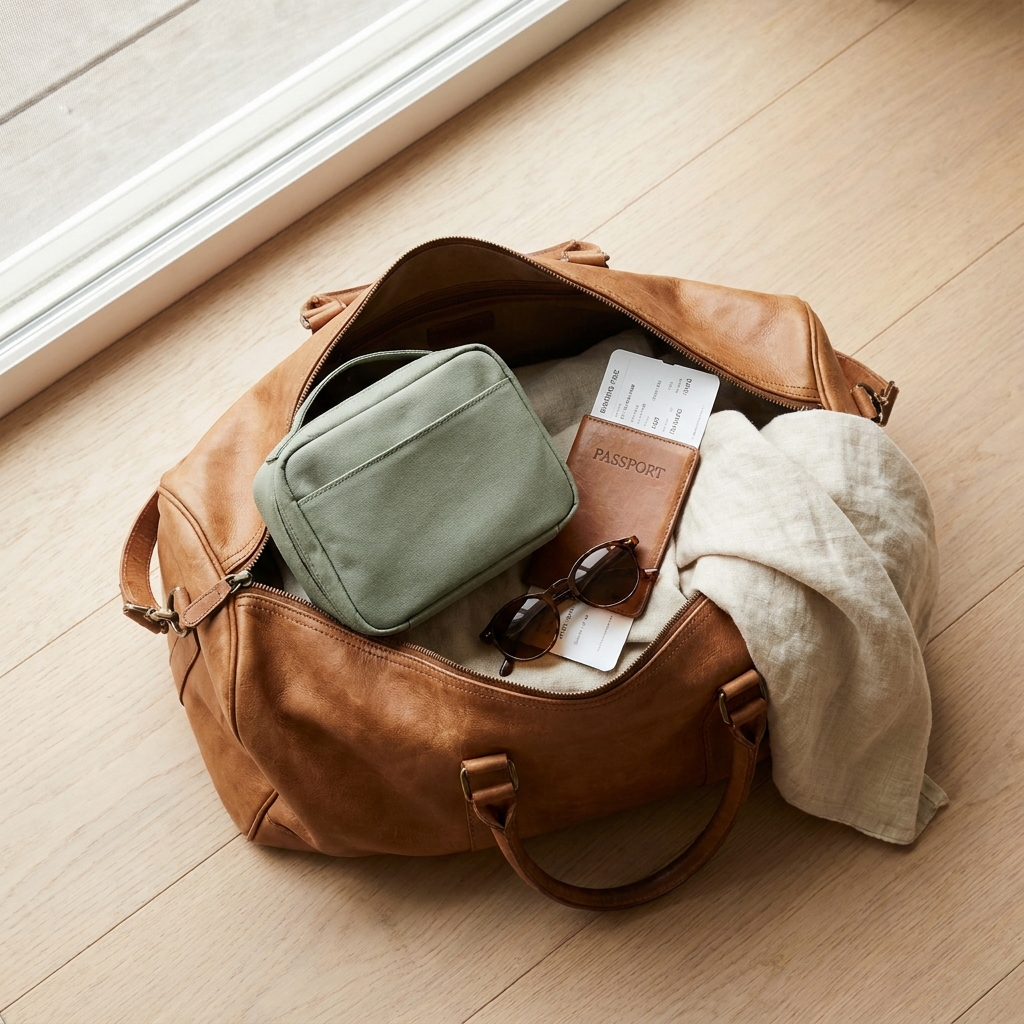
Traveling with GLP-1 Medication: A 2026 Storage & Security Guide
Introduction: Why GLP-1 Travel Logistics Deserve a Real Answer
Roughly 11% of US adults now use GLP-1 medications, according to a July 2026 Gallup survey, up from 3% in 2024. That means millions of people are packing injectable medication for work trips, holidays, and family visits.
Most travel guides are written for a single brand-name pen. Patients on a compounded GLP-1 medication or Red Mountain’s RM3® program are left guessing which rules apply to them. This guide brings TSA screening, temperature storage, time-zone dosing, and international documentation into one framework that works for every format. A clinic should provide this kind of logistical support proactively, so patients do not have to piece it together on their own.
The Short Answer: Core Rules at a Glance
- Carry on, never check.
- Refrigerate before first use.
- Never freeze.
- TSA treats injectable medication as a medically necessary liquid.
- Respect the minimum gap between weekly doses (48 or 72 hours, depending on the medication).
Room-temperature windows and documentation needs vary by medication format and trip type.
| Rule | Applies To | Key Note |
|---|---|---|
| Carry-on only | All GLP-1 formats | Cargo holds reach damaging temperatures |
| Refrigerate before first use | All GLP-1 formats | 36°F to 46°F (2°C to 8°C) |
| In-use room-temperature window | Varies by format | Check the pharmacy or clinic label |
| Doctor’s letter | International travel | Not required by TSA domestically |
TSA Security Screening: What the Rules Actually Say
TSA rules are based on the item category (injectable medication), not the brand or compounding status. Everything below applies equally to all formats.
Injectable Medication Is Exempt from the 3-1-1 Liquids Rule
TSA classifies injectable GLP-1 medication as a medically necessary liquid, so it is exempt from the standard 3.4 oz (100 ml) carry-on limit. Tablets, liquid medicine, syringes, and most related medical equipment are also permitted in carry-on bags.
Pens, Syringes, and Sharps
Pens, syringes, and needles are allowed in carry-on luggage when declared at the checkpoint. Travelers should keep medication in its original packaging where possible and tell the officer about it before being asked.
Do Travelers Need a Doctor’s Note for Domestic Flights?
No. TSA does not require a prescription label, medical ID, or clinician letter for domestic screening. Travelers can simply tell the officer they are carrying medical supplies. International travel is different, as covered later in this guide.
TSA Cares: The Underused Resource Worth Knowing About
TSA Cares is an official support line for passengers with medical conditions. Travelers can call (855) 787-2227 or submit the TSA Cares online form at least 72 hours before a flight. Many travelers overlook this step, but it can make the checkpoint easier, especially for first-time travelers carrying injectable medication.
Storage Fundamentals That Apply to Every GLP-1 Format
These physical rules hold true whether a patient uses a brand-name pen, a compounded GLP-1 medication, or RM3®.
Refrigeration Before First Use
Manufacturers consistently direct that unopened pens and vials be refrigerated between 36°F and 46°F (2°C to 8°C) before first use. Unless a patient has received other instructions, this is a sensible default for any GLP-1 medication.
Never Freeze, Never Check It in Luggage
Freezing causes damage that cannot be reversed. A frozen pen should never be used, even if it thaws and looks normal. For the same reason, GLP-1 medication should never go in checked luggage, because cargo holds can reach extreme temperatures.
Parked cars are an easy risk to miss. In summer, the inside of a parked car can exceed 140°F, which is far outside the safe storage range.
Keeping Medication Cool On the Move
TSA permits gel packs and ice packs in medically necessary quantities, even if they are partially melted or slushy. Two common options for keeping medication cool are:
- Insulated travel cases with cooling packs.
- Evaporative-cooling wallets, some of which stay cool for 45 hours or more without ice or electricity.
Red Mountain does not endorse specific brands. The best choice is the one that fits the trip.
At the destination, travelers should request a hotel room with a mini-fridge. Medication should not be stored in the fridge door, because the temperature there fluctuates.
Storage Differences by Medication Format
Once the universal rules above are covered, the main differences between formats involve in-use storage windows.
Brand-Name GLP-1 Pens
After first use, room-temperature windows vary by product and sometimes by device type within the same product. Some brand-name GLP-1s list different windows for single-dose pens and vials than for multi-dose devices. The most reliable step is to check the manufacturer insert or pharmacy label for the exact in-use window, rather than relying on memory or general advice found online.
Compounded GLP-1 Medications
A compounded GLP-1 medication may come with storage and beyond-use-date instructions specific to the pharmacy and formulation. Patients should follow the label and guidance from their dispensing pharmacy or clinic. They should not assume that brand-name room-temperature windows apply.
RM3® and Clinic-Dispensed Medication
Patients on Red Mountain’s RM3® program or another clinic-dispensed medication should treat their clinic’s label and instructions as the final word on storage before travel. This is exactly the kind of question a patient should be able to ask the care team directly before a trip, instead of relying on generic advice.
Packing and Carrying Checklist for Flights
- Pack medication in a carry-on only.
- Keep it in its original packaging with labels.
- Bring a sharps disposal container.
- Include a cooling pack or insulated case.
- Pack backup doses if the length of the trip allows.
- Carry a printed dosing schedule.
- Keep medication separate from other items so it is easy to reach during screening.
- Confirm refrigeration access (hotel fridge or cooler) at the destination before leaving.
- Have a brief pre-trip conversation with a provider or pharmacist to confirm storage details and get any needed documentation.
Crossing Time Zones: Dosing Schedule Guidance
Weekly GLP-1 medications have a long half-life, which means they stay active in the body for days. As a result, time-zone changes are far less disruptive than many patients expect.
The 48-Hour (and 72-Hour) Minimum Gap Rule
- Semaglutide-based weekly medication: the dosing day can change as long as at least 48 hours have passed since the last dose.
- Tirzepatide-based medication: at least 72 hours (3 days) must pass since the last dose before changing the day.
For most trips crossing fewer than five time zones, this minimum gap is the only rule that matters. The exact clock time is largely irrelevant.
Long-Haul, Multi-Zone Travel Strategy
For trips crossing five or more time zones, patients can dose in local time on their usual weekday. If the dose would fall during the flight, there are two accepted options:
- Take the dose before departure.
- Take it after arrival at the original local time.
Either option works as long as the 48- or 72-hour minimum is respected. Patients should pick one approach and stick with it for the rest of the trip.
What to Do About a Missed or Uncertain Dose
Crossing the International Date Line or taking a long cruise can make a dose easy to miss. As general guidance, a missed dose can typically be taken within four days of the scheduled date. After that, it can be skipped and the normal schedule resumed. This is not a substitute for provider instruction. When in doubt, patients should contact their provider rather than guess.
International Travel: Documentation and Customs
Most domestic-focused guides say little about international travel, even though it carries the most requirements.
Why Documentation Matters More Abroad
TSA does not require documentation, but international customs and security often expect it. A prescriber’s letter on clinic letterhead confirming medical necessity is strongly recommended. The letter should describe the medication category in general terms.
Checking Destination Import Rules
Before departure, travelers should research the destination country’s rules on importing injectable and prescription medications. Some Asian and Middle Eastern airports have stricter medication-declaration requirements, so advance documentation is especially valuable in those regions.
Practical Tips for Customs Screening
- Keep medication in its original, labeled packaging.
- Carry a paper copy of the prescriber’s letter and a digital or photo backup.
- Patients using a compounded GLP-1 medication or RM3® should ask their clinic specifically about international documentation, since compounded formulations may receive extra scrutiny.
Why This Guidance Should Come From a Clinic, Not a Search Engine
Patients should not have to assemble travel plans from scattered, brand-specific blog posts. A recent U.S. News & World Report survey found that a lack of support (36%) is one of the leading reasons patients switch GLP-1 platforms. Access to ongoing behavioral and clinical support is also consistently linked with better long-term experiences on treatment.
At Red Mountain, medication is treated as a tool. Structure, support, and clinical guidance, including practical matters like travel planning, are what sustain results over time.
Conclusion
The universal rules are simple: carry on only, never freeze, and refrigerate before first use. The details vary by format. Brand-name in-use windows differ by product, and patients on compounded medication or RM3® should follow their dispensing label. Time-zone dosing and international documentation take a little advance planning, but neither needs to stand in the way of travel. Sustainable metabolic health depends on a treatment plan that fits a patient’s real life, including the trips.
Next Step: Talk Through Travel Plans With a Care Team
Upcoming travel is a natural topic to raise at the next consult or check-in. Red Mountain’s clinical team can confirm storage windows for a patient’s specific medication, help with documentation, and adjust dosing guidance before a trip. This is a normal, expected part of ongoing care.
Red Mountain may prescribe a compounded version of a GLP-1. Compounded GLP-1s contain semaglutide or tirzepatide. Compounded GLP-1s have not been approved by the FDA or reviewed by the FDA for safety, effectiveness, or quality. Compounded GLP-1s have not been demonstrated to the FDA to be safe or effective for weight loss. Compounded GLP-1s manufacturing processes have not been reviewed by the FDA. FDA-approved products containing semaglutide and tirzepatide are available. Ask your provider for more information.